281 Arrested Worldwide in Coordinated Business‑Email‑Compromise Operation, DOJ Says
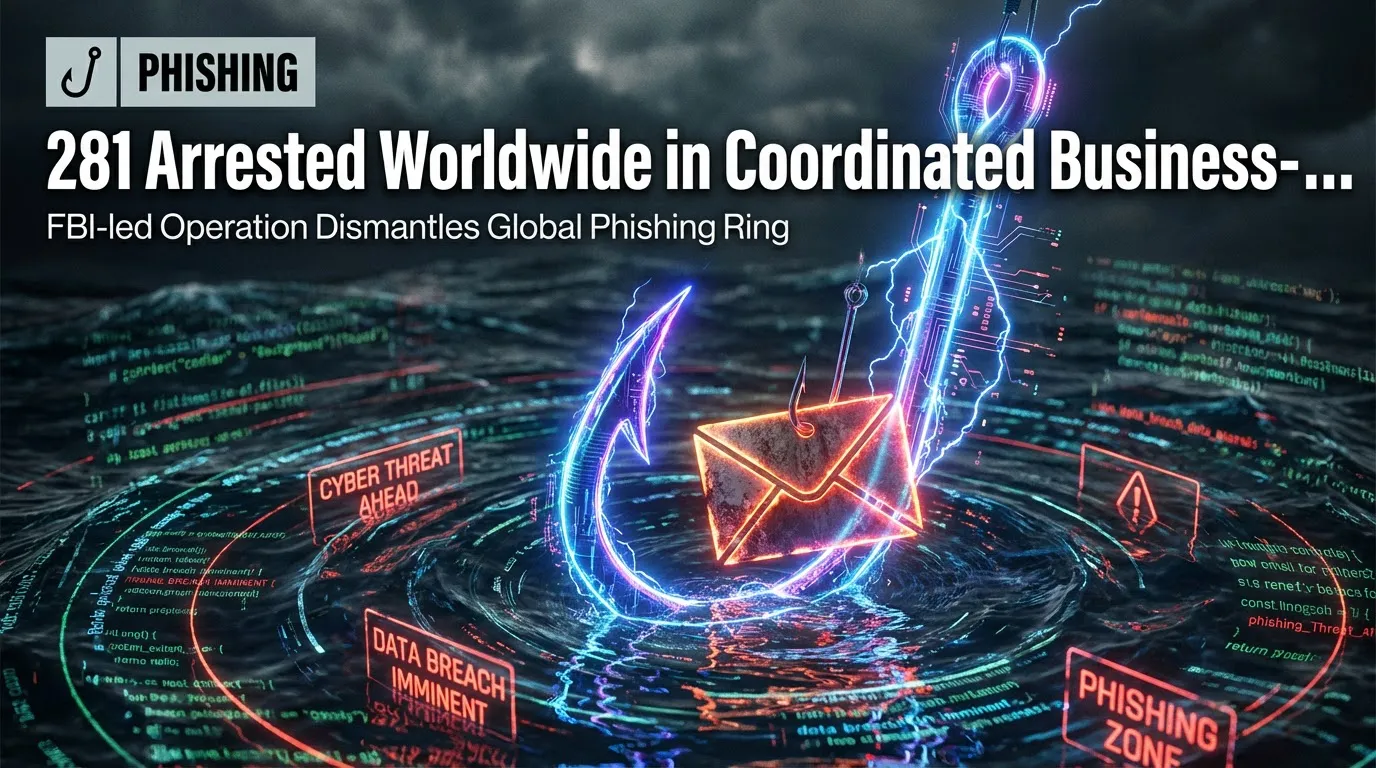
The Department of Justice announced a multinational enforcement operation that resulted in 281 arrests worldwide linked to business-email-compromise (BEC) and related wire-transfer frauds, with millions of dollars seized. The operation highlights persistent global scale of BEC attacks and continued emphasis on disrupting organized rings that siphon corporate and personal funds.
The Department of Justice summarized a coordinated international enforcement action that led to 281 arrests worldwide in connection with business-email-compromise (BEC) schemes and related wire-transfer frauds. Prosecutors reported significant asset seizures and multiple indictments alleging that organized groups used email compromise, invoice manipulation, and social engineering to trick companies and individuals into authorizing high-value transfers. The operation involved multiagency and multijurisdictional cooperation to trace wire flows, pierce layers of intermediaries, and identify money-mule networks used to convert and move stolen funds. DOJ characterized the action as part of a sustained strategy to target the infrastructure and facilitators of BEC rings, combining traditional investigative techniques with modern financial forensics to achieve arrests and asset restraint. The public summary emphasizes the need for robust corporate controls, employee training on invoice and payment verification, and continued international collaboration to interrupt the cross-border channels that enable large-scale BEC frauds.
What this article means for a user right now
The Department of Justice announced a multinational enforcement operation that resulted in 281 arrests worldwide linked to business-email-compromise (BEC) and related wire-transfer frauds, with millions of dollars seized. The operation highlights persistent global scale of BEC attacks and continued emphasis on disrupting organized rings that siphon corporate and personal funds.
- Text Scam Checker: For suspicious SMS, fake delivery texts, smishing, and verification-code pressure.
- Phishing Link Checker: For suspicious links, login pages, fake delivery texts, and scam emails.
Best next step
Official resources
Industry anti-phishing organization with reporting and education resources.
FTC Consumer AdviceUS consumer guidance for scams, fraud patterns, and reporting options.
FBI Internet Crime Complaint CenterOfficial reporting channel for internet-enabled crime in the United States.