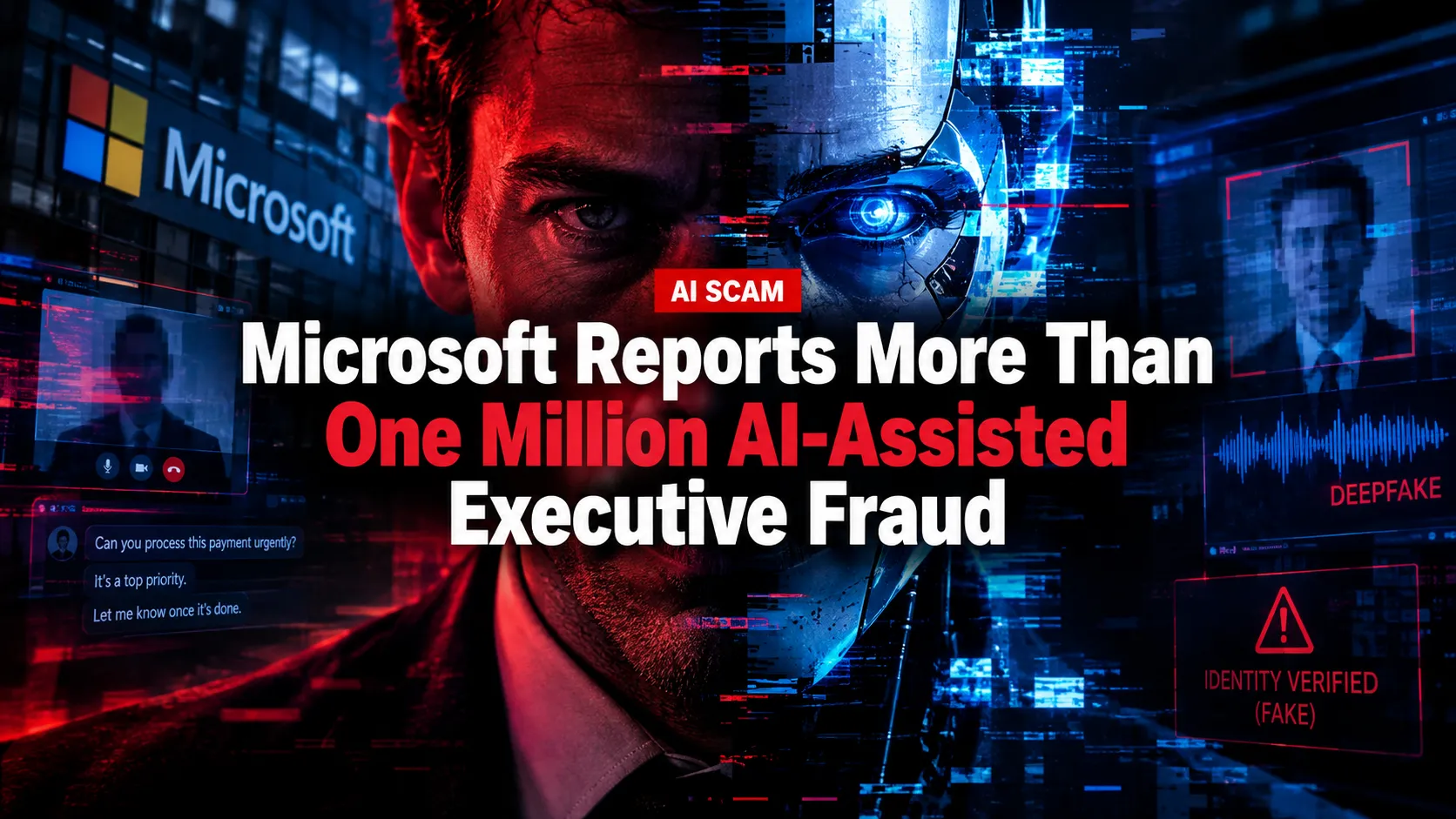
Experts warn AI voice‑cloning is fueling a rise in vishing and social‑engineering scams

Industry reporting reiterates that AI voice cloning is increasingly used by scammers to impersonate executives, relatives or service agents in vishing attacks. While no single major incident dominated the past 48 hours, researchers urge stronger authentication and public awareness.
Security and consumer-protection outlets continue to highlight AI voice-cloning as a growing enabler for vishing and complex social-engineering frauds. Reports from industry researchers and companies such as McAfee emphasize that inexpensive, high-fidelity voice-synthesis tools let attackers imitate executives, relatives, or support agents convincingly, increasing the likelihood that targets will comply with financial or data requests. Although no single high-profile voice-cloning incident was newly reported in the latest 48-hour window, the trend accelerates risk across sectors: corporate finance teams face CEO fraud delivered as realistic voice prompts, families receive calls purporting to be relatives in distress, and call-center authentication systems based on voiceprints show vulnerabilities. Recommended mitigations include adopting multi-factor and out-of-band verification for financial requests, training staff to treat unsolicited voice confirmations skeptically, and using challenge-response phrases or callback procedures. Vendors and regulators are also urged to improve detection tools, watermarking of synthetic audio, and public guidance to reduce the effectiveness of cloned-voice scams. (Source: McAfee analysis and industry coverage, 2025)
What this article means for a user right now
Industry reporting reiterates that AI voice cloning is increasingly used by scammers to impersonate executives, relatives or service agents in vishing attacks. While no single major incident dominated the past 48 hours, researchers urge stronger authentication and public awareness.
- Phone Scam Checker: For suspicious calls, voicemails, callback pressure, and unknown caller decisions.
- Scam Phone Number Lookup: For checking the context around unknown phone numbers and suspicious callbacks.
Related Scam Types
Best next step
For suspicious calls, voicemails, callback pressure, and unknown caller decisions.
Scam Phone Number LookupFor checking the context around unknown phone numbers and suspicious callbacks.
Spam Call BlockerFor suspicious callers, callback decisions, robocalls, and voice scam pressure.