FBI: Bitcoin‑ATM scams topped ~$333.5M with ~12,000 complaints through Nov 2025
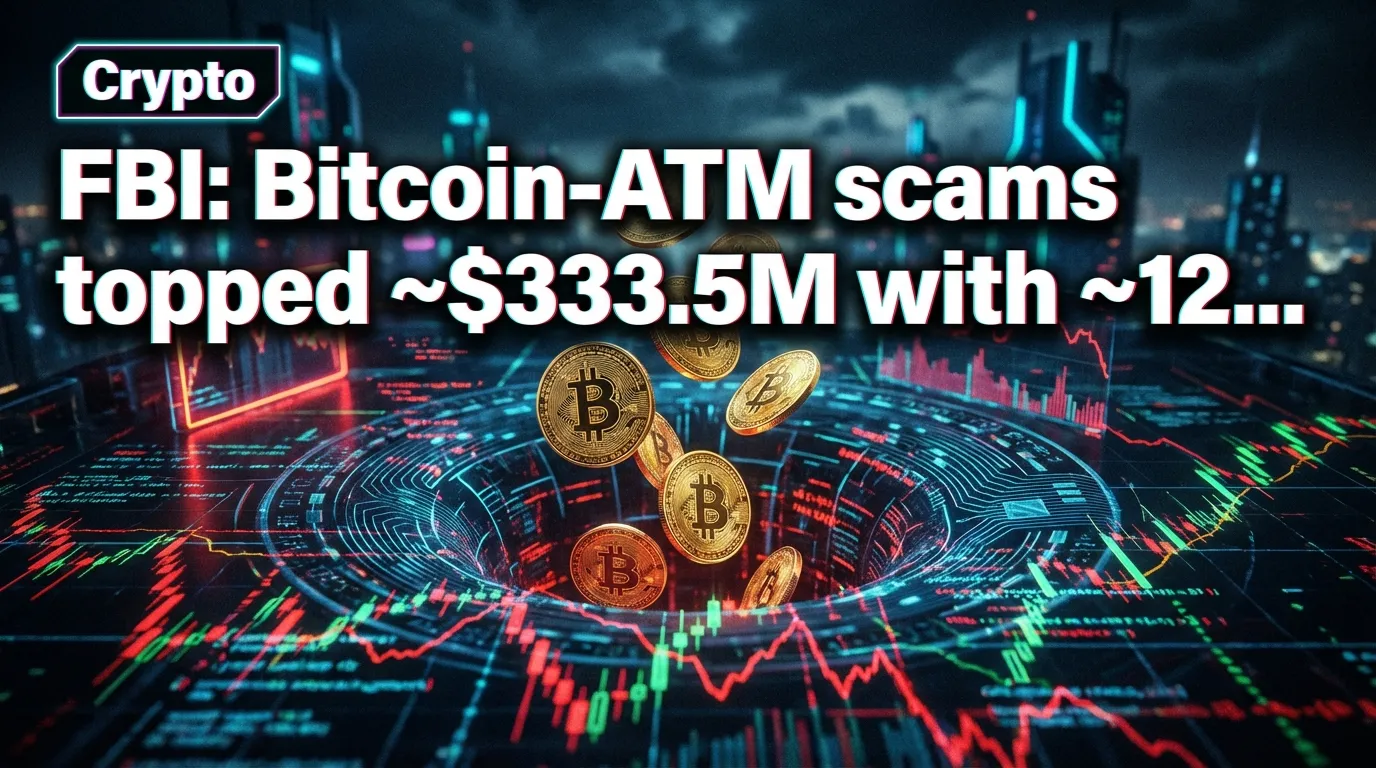
U.S. FBI Internet Crime Complaint Center data show crypto‑kiosk fraud complaints surged to about 12,000 and reported losses of roughly $333.5 million in 2025. Scammers commonly impersonate banks or agencies and coerce victims to deposit cash at Bitcoin ATMs, a payment method that makes recovery extremely difficult.
Data compiled by the FBI's Internet Crime Complaint Center and reported by Business Insider and ICIJ reveal a sharp escalation in Bitcoin‑ATM or crypto‑kiosk fraud during 2025. Through November, roughly 12,000 complaints were recorded with aggregate reported losses of about $333.5 million, marking a record high and a steep year‑over‑year increase. Investigators say scammers often initiate contact by impersonating bank officials, tax or law enforcement agencies, or technical support, pressuring victims to withdraw cash and deposit it at local crypto ATMs to “secure” accounts or avoid penalties. Because Bitcoin ATM transactions are often irreversible and involve intermediaries, funds are difficult to trace and recover, complicating remediation for victims. Consumer advocates and law enforcement officials are urging stronger regulation of crypto‑kiosk operators, enhanced transaction monitoring, mandatory identity checks, and better public education on this evolving fraud vector. The FBI is also calling for closer cooperation between ATM operators, crypto exchanges, and financial institutions to detect and block suspicious flows early and to create mechanisms for faster victim support and reporting.
What this article means for a user right now
U.S. FBI Internet Crime Complaint Center data show crypto‑kiosk fraud complaints surged to about 12,000 and reported losses of roughly $333.5 million in 2025. Scammers commonly impersonate banks or agencies and coerce victims to deposit cash at Bitcoin ATMs, a payment method that makes recovery extremely difficult.
- Phone Scam Checker: For suspicious calls, voicemails, callback pressure, and unknown caller decisions.
- Scam Phone Number Lookup: For checking the context around unknown phone numbers and suspicious callbacks.
Related Scam Types
Best next step
For suspicious calls, voicemails, callback pressure, and unknown caller decisions.
Scam Phone Number LookupFor checking the context around unknown phone numbers and suspicious callbacks.
Spam Call BlockerFor suspicious callers, callback decisions, robocalls, and voice scam pressure.