Federal Court Sanctions Cliq Inc. $6.5M for Violating FTC Order on Fraudulent Payment Processing
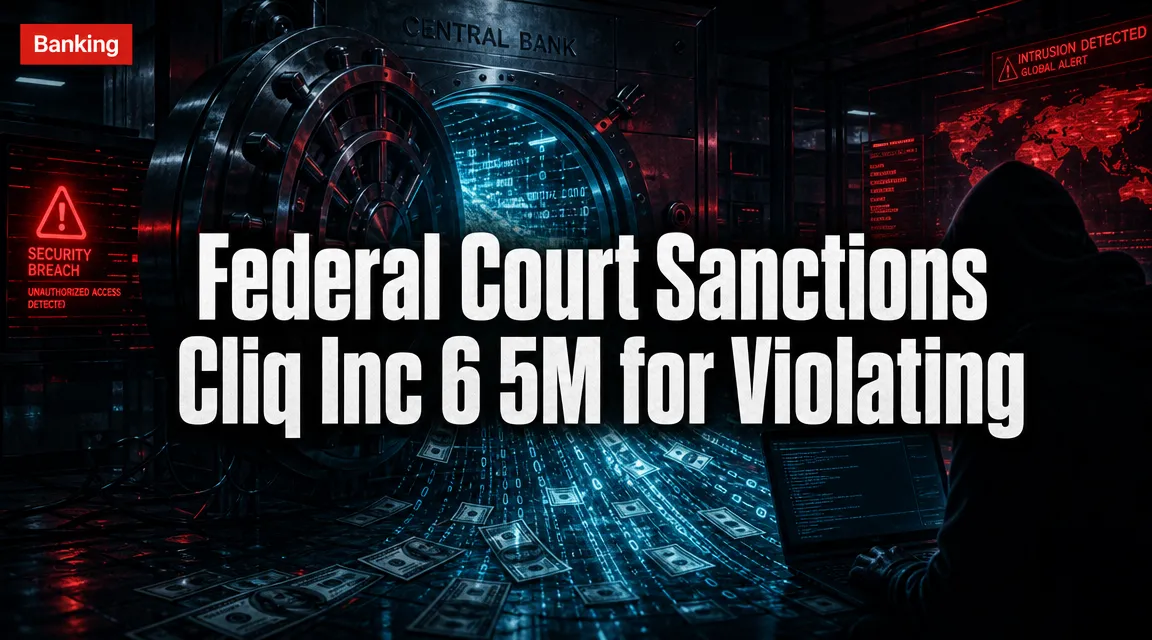
The FTC said a federal judge found Cliq Inc. (formerly Cardflex) and its operators in civil contempt and imposed $6.5 million in sanctions. The court concluded Cliq violated a 2015 court order meant to prevent consumer fraud by unlawfully processing transactions for high-risk merchants and failing to meet underwriting and investigation requirements.
The FTC reported that a federal judge held Cliq Inc. (formerly Cardflex) and its operators in civil contempt for violating an FTC-related 2015 court order designed to stop consumer fraud. The court imposed $6.5 million in sanctions, with the FTC describing the contempt as tied to payment-processing conduct that enabled scam activity. The FTC alleged Cliq continued to process transactions for high-risk merchants in ways that conflicted with required controls. Specifically, the FTC said the defendants failed to perform underwriting and investigations that the 2015 order required before allowing merchant activity. The enforcement focus is significant because payment processors can be used as force multipliers for fraud: if transactions flow through compliant channels, scammers can scale operations while fraud-detection barriers are weakened or bypassed. The contempt finding signals that intermediary “plumbing” companies are not insulated from liability when they ignore court-ordered safeguards. The case also reflects an ongoing enforcement priority: ensuring underwriting, risk-monitoring, and merchant review requirements are actually implemented, not merely promised. For consumers, such actions can translate into fewer successful scam payments and more scrutiny of high-risk transactions and merchant profiles.
What this article means for a user right now
The FTC said a federal judge found Cliq Inc. (formerly Cardflex) and its operators in civil contempt and imposed $6.5 million in sanctions. The court concluded Cliq violated a 2015 court order meant to prevent consumer fraud by unlawfully processing transactions for high-risk merchants and failing to meet underwriting and investigation requirements.
- Phone Scam Checker: For suspicious calls, voicemails, callback pressure, and unknown caller decisions.
- Scam Phone Number Lookup: For checking the context around unknown phone numbers and suspicious callbacks.
Best next step
For suspicious calls, voicemails, callback pressure, and unknown caller decisions.
Scam Phone Number LookupFor checking the context around unknown phone numbers and suspicious callbacks.
Spam Call BlockerFor suspicious callers, callback decisions, robocalls, and voice scam pressure.