FTC Flags CAPTCHA Prompts as a Scam Gateway to Fake Verification and Malicious Redirects
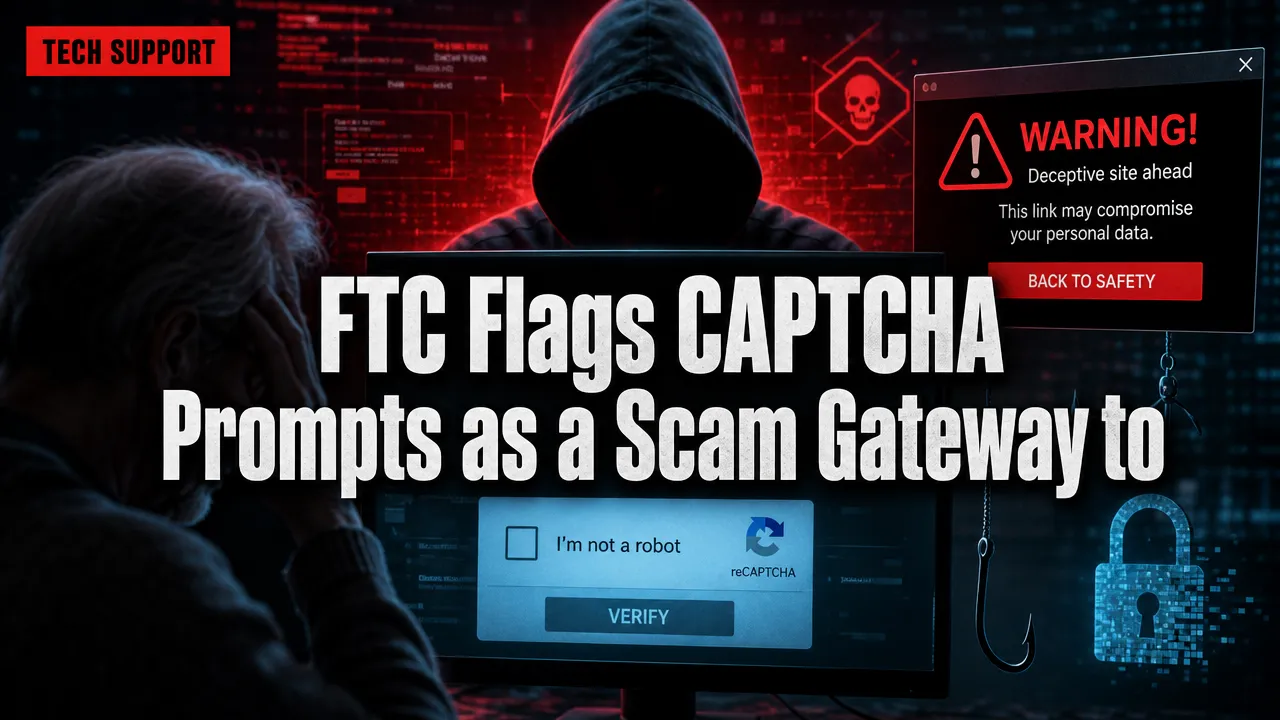
According to the FTC, CAPTCHA prompts can be weaponized to move victims into harmful online actions. The key is refusing to follow unexpected instructions tied to “verification” messages.
The FTC describes how scammers turn CAPTCHA prompts into a gateway for deception. A CAPTCHA is meant to stop automated abuse, but fraudsters can embed it within a larger false narrative—one that suggests the user must complete additional steps immediately. The result is a push to keep interacting, even when the request feels unusual or doesn’t align with the real service’s normal sign-in and verification process. These scams often depend on timing and urgency. Victims may see prompts that imply a security problem, account lock, or urgent threat, then face CAPTCHA screens paired with buttons or instructions that go beyond basic verification. Rather than confirming legitimacy, the CAPTCHA interaction may funnel the user to a fraudulent website, a fake support flow, or a malware-delivery step. The FTC’s warning focuses on behavioral red flags: CAPTCHA pages that appear on unexpected sites, instructions that tell you to click “continue,” enter sensitive information, or follow prompts that don’t resemble typical verification. The safest move is to stop and reassess—close the suspicious page, navigate to the official service directly, and avoid providing any data or executing actions prompted only by a CAPTCHA screen. By treating CAPTCHA steps as a potential trap when context is wrong, consumers can reduce exposure to redirect-based fraud.
What this article means for a user right now
According to the FTC, CAPTCHA prompts can be weaponized to move victims into harmful online actions. The key is refusing to follow unexpected instructions tied to “verification” messages.
- Text Scam Checker: For suspicious SMS, fake delivery texts, smishing, and verification-code pressure.
- Phishing Link Checker: For suspicious links, login pages, fake delivery texts, and scam emails.
Related Scam Types
Best next step
Official resources
Related Articles
Tren de Aragua Links Cited in DOJ ATM Malware Case: Ploutus Used to Force U.S. ATMs to Dispense Cash
Tonawanda NY man charged after fake Microsoft “security” alert led to $22,000 fraud attempt