FTC: Search-Result Fraud for Health Insurance—Scroll Past “Ad/Sponsored” Government Impersonators
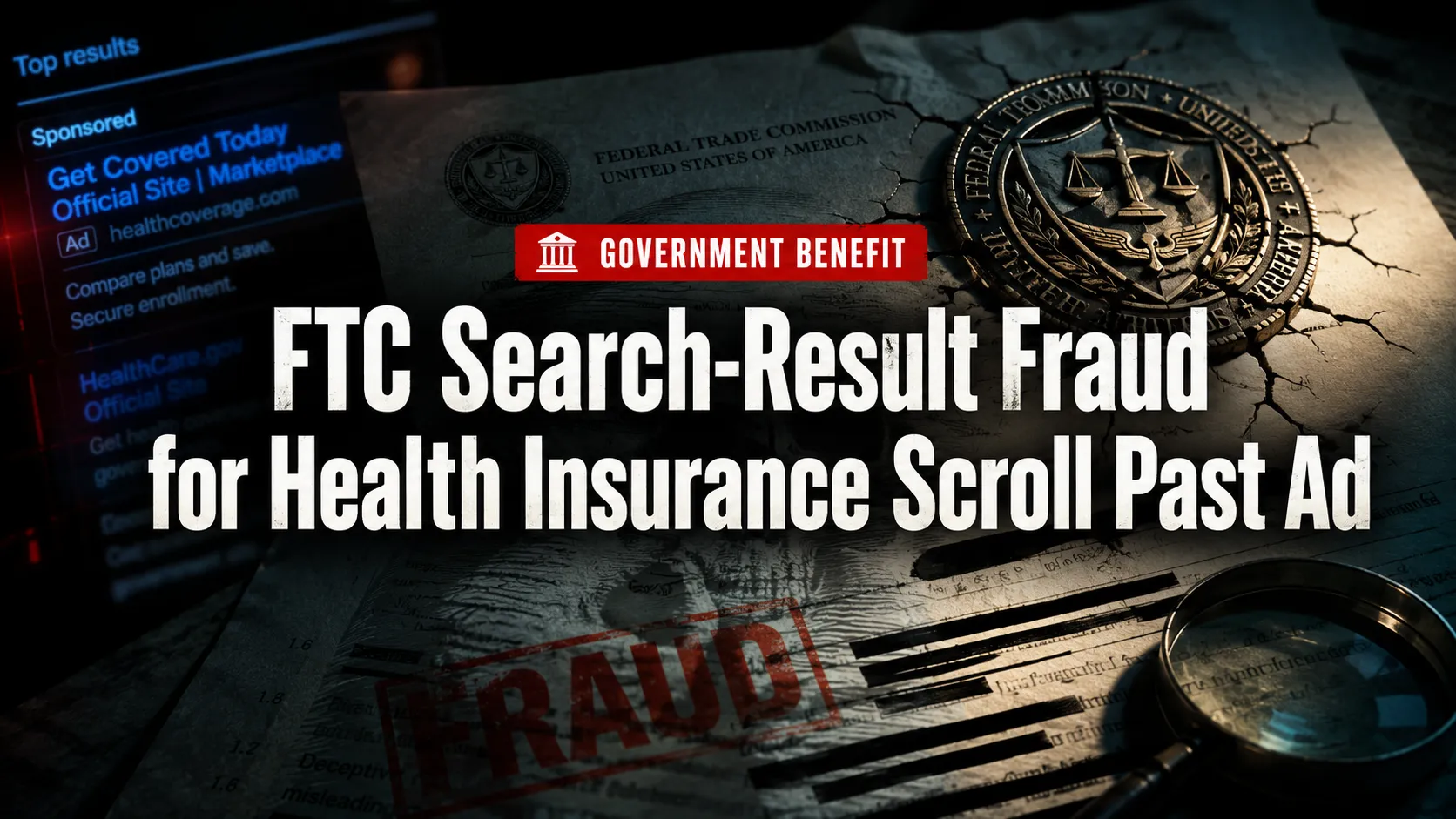
The FTC warns that paid search results can mimic government healthcare pages to collect personal and financial information. Consumers should check for “Ad/Sponsored,” confirm .gov-style addresses, and scroll to organic results.
The FTC warns that scammers can exploit search ads to impersonate government sources for health insurance. The tactic is designed for people actively seeking coverage, including Medicare and other government-related programs. By paying for placement at the top of search results, fraudsters can make lookalike pages appear authoritative and urgent. The FTC recommends consumers rely on visible cues: look for the “Ad” or “Sponsored” label, then carefully verify the actual website address. Government sites typically use recognizable domains (such as .gov), while impersonators may use closely resembling names or unfamiliar domains. Even when the page design resembles official guidance, the FTC stresses that the search listing and landing URL matter more than appearance. A common failure point is clicking immediately on the first result without confirming the destination. The FTC advises scrolling further down to reach organic results and comparing URLs before submitting any data. If the page requests sensitive personal information without clear legitimacy, it should be treated as suspicious. By combining ad-awareness, URL verification, and a habit of scrolling to organic results, consumers can avoid being pulled into impersonation-driven data collection schemes.
What this article means for a user right now
The FTC warns that paid search results can mimic government healthcare pages to collect personal and financial information. Consumers should check for “Ad/Sponsored,” confirm .gov-style addresses, and scroll to organic results.
- Phone Scam Checker: For suspicious calls, voicemails, callback pressure, and unknown caller decisions.
- Scam Phone Number Lookup: For checking the context around unknown phone numbers and suspicious callbacks.
Related Scam Types
Best next step
For suspicious calls, voicemails, callback pressure, and unknown caller decisions.
Scam Phone Number LookupFor checking the context around unknown phone numbers and suspicious callbacks.
Spam Call BlockerFor suspicious callers, callback decisions, robocalls, and voice scam pressure.
Official resources
Related Articles
DOJ: arrests of seven men for alleged fraudulent PPP/EIDL loan applications totaling $205,639
FTC Returns Nearly $3M to Victims of Golden Home Services Mortgage Relief Scheme