
FTC warns fake jury-duty arrest ‘warrants’ sent by text/email to demand payment
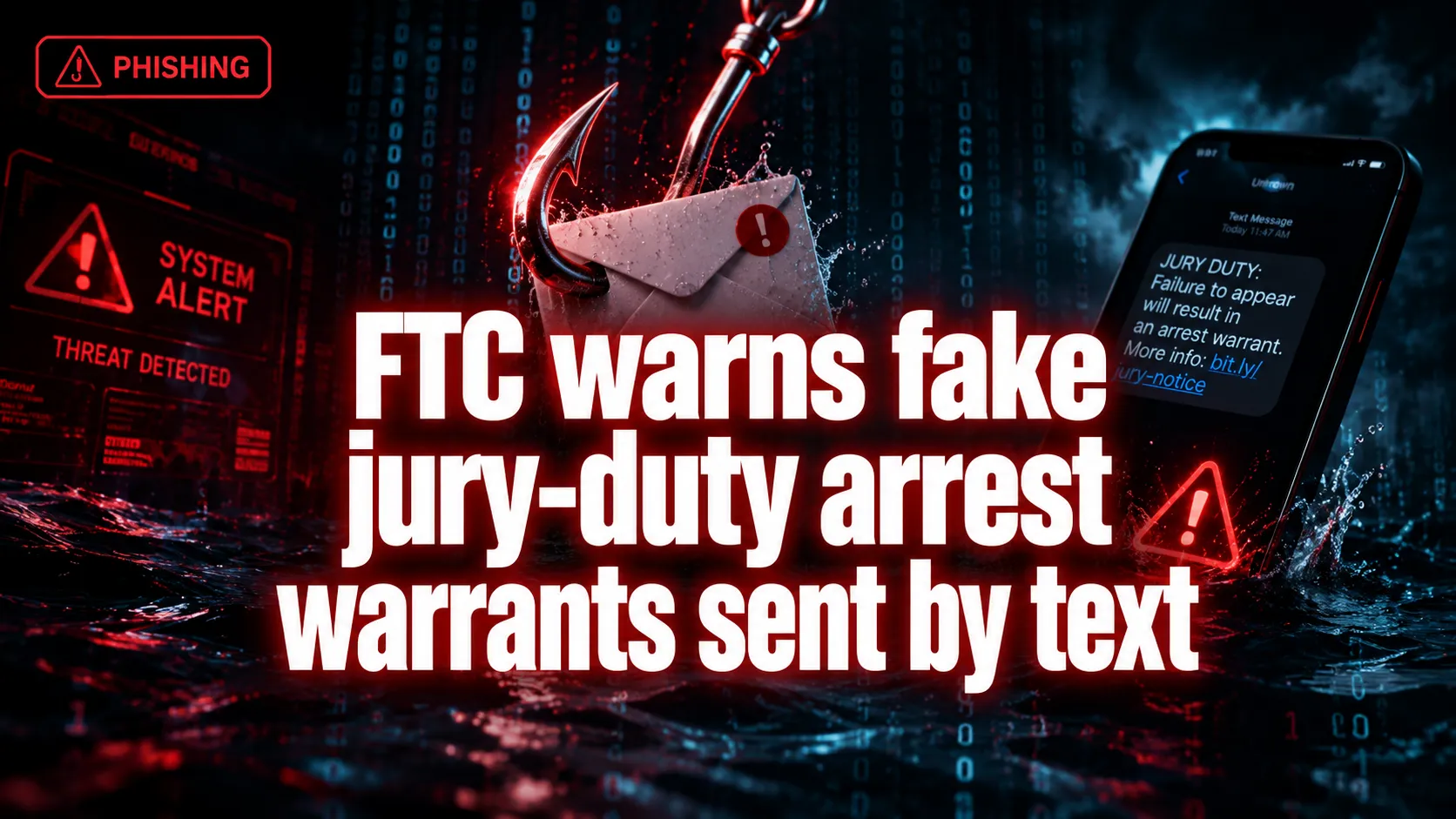
The FTC says scammers threaten arrest for missed jury duty and send fake warrant documents by text or email. The messages often instruct victims to pay using apps, crypto, wire transfers, or gift cards.
The FTC issued guidance about a scam in which criminals impersonate government authorities and claim the recipient missed jury duty. After the initial contact, fraudsters escalate the pressure by threatening arrest and sending fraudulent “warrant” paperwork via text and email. These messages are designed to look urgent and official, but the FTC stresses that authentic law-enforcement actions do not work this way. According to the FTC, the key scam mechanics include coercive arrest threats, fake documentation, and payment demands that push victims to use hard-to-reverse methods. Victims may be told to pay to avoid arrest, sometimes through payment apps, cryptocurrency, wire transfers, or gift cards. The scammers may also try to convince the victim that ignoring the message will lead to immediate legal consequences. The FTC’s warning highlights that real authorities do not text/email arrest warrants and do not demand money by phone to resolve alleged legal failures. If a message claims you face arrest and includes payment instructions, it should be treated as a likely impersonation attempt rather than a legitimate notice.
What this article means for a user right now
The FTC says scammers threaten arrest for missed jury duty and send fake warrant documents by text or email. The messages often instruct victims to pay using apps, crypto, wire transfers, or gift cards.
- Phone Scam Checker: For suspicious calls, voicemails, callback pressure, and unknown caller decisions.
- Scam Phone Number Lookup: For checking the context around unknown phone numbers and suspicious callbacks.
Related Scam Types
Best next step
For suspicious calls, voicemails, callback pressure, and unknown caller decisions.
Scam Phone Number LookupFor checking the context around unknown phone numbers and suspicious callbacks.
Spam Call BlockerFor suspicious callers, callback decisions, robocalls, and voice scam pressure.
Official resources
Related Articles
FBI Warns Scammers Impersonating IC3 to Retarget Prior Victims With AI Deepfakes
DOJ: Scattered Spider member Peter Stokes arrested in Finland and extradited to the U.S. for intrusion and fraud