Hiya/TechRadar: One in Four Americans Received Deepfake Voice Calls in Past Year
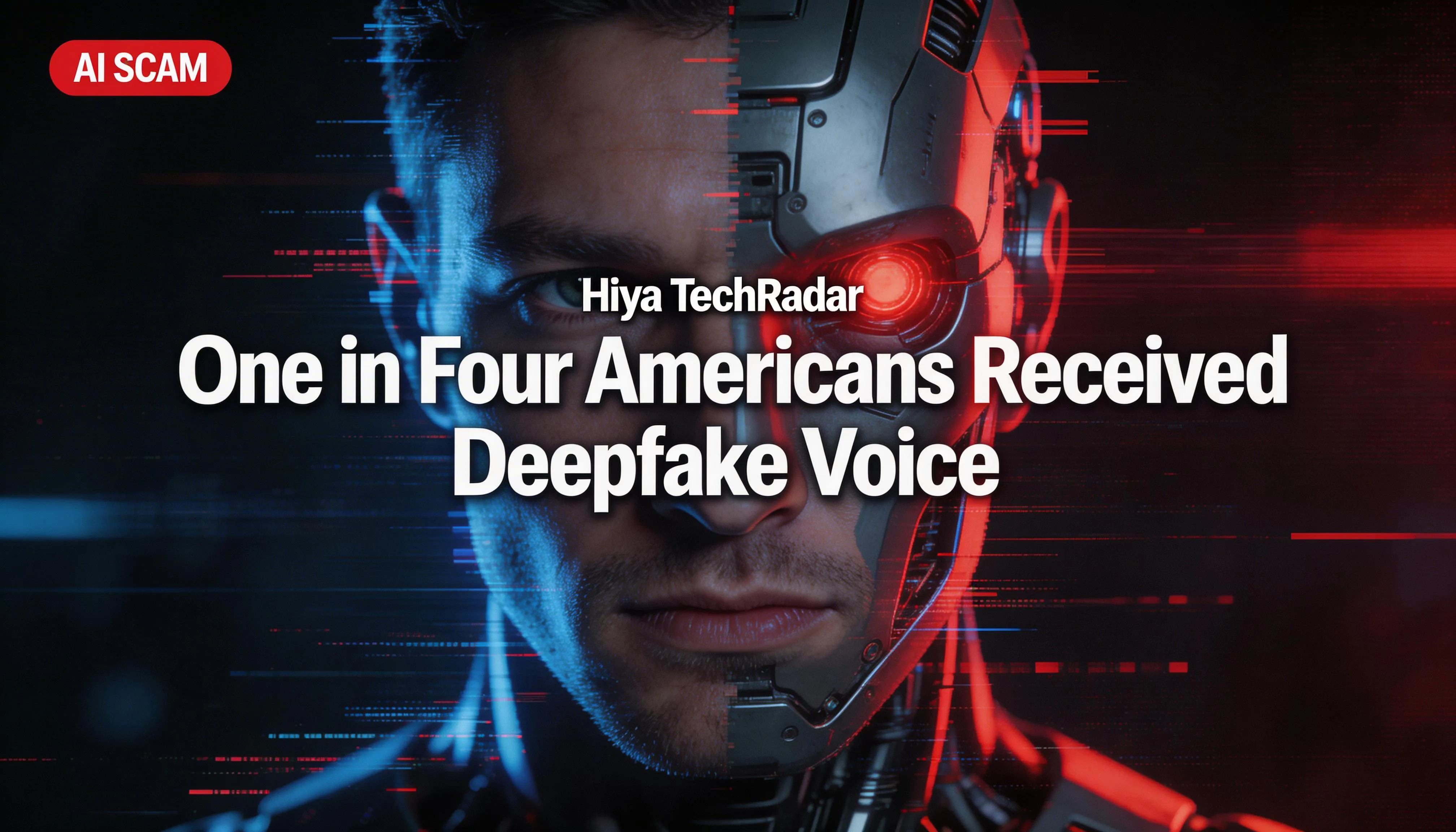
A Hiya-backed multinational survey reported more than 12,000 consumers across six countries, finding one in four Americans said they had received a deepfake voice call in the past 12 months. Experts warn that generative AI has accelerated voice‑cloning scams targeting seniors and vulnerable groups and call for stronger carrier and regulatory responses to limit financial losses.
A multinational consumer survey covered by TechRadar, based on Hiya data, polled more than 12,000 respondents across the United States, United Kingdom, Canada, France, Germany and Spain and found that 25% of American respondents reported receiving a deepfake voice call in the prior 12 months. Many participants said they could not reliably distinguish synthetic voices from genuine ones, underscoring how accessible voice‑cloning tools have become to fraudsters. Experts cited in the coverage note that generative AI has lowered technical barriers, enabling scaled social‑engineering campaigns that impersonate family members, financial staff or public officials to extract payments or account credentials. Seniors and people with limited technical literacy are particularly exposed, prompting calls for stronger telecom carrier controls, enhanced call‑labeling standards, and regulatory measures to mandate detection and blocking tools. The report recommends faster cross‑industry information sharing and consumer‑education campaigns to reduce successful impersonation and financial loss as AI‑enabled voice scams proliferate.
What this article means for a user right now
A Hiya-backed multinational survey reported more than 12,000 consumers across six countries, finding one in four Americans said they had received a deepfake voice call in the past 12 months. Experts warn that generative AI has accelerated voice‑cloning scams targeting seniors and vulnerable groups and call for stronger carrier and regulatory responses to limit financial losses.
- Phone Scam Checker: For suspicious calls, voicemails, callback pressure, and unknown caller decisions.
- Scam Phone Number Lookup: For checking the context around unknown phone numbers and suspicious callbacks.
Best next step
For suspicious calls, voicemails, callback pressure, and unknown caller decisions.
Scam Phone Number LookupFor checking the context around unknown phone numbers and suspicious callbacks.
Spam Call BlockerFor suspicious callers, callback decisions, robocalls, and voice scam pressure.