WhatsApp screen‑sharing exploited in growing global fraud wave, Singapore cases cited
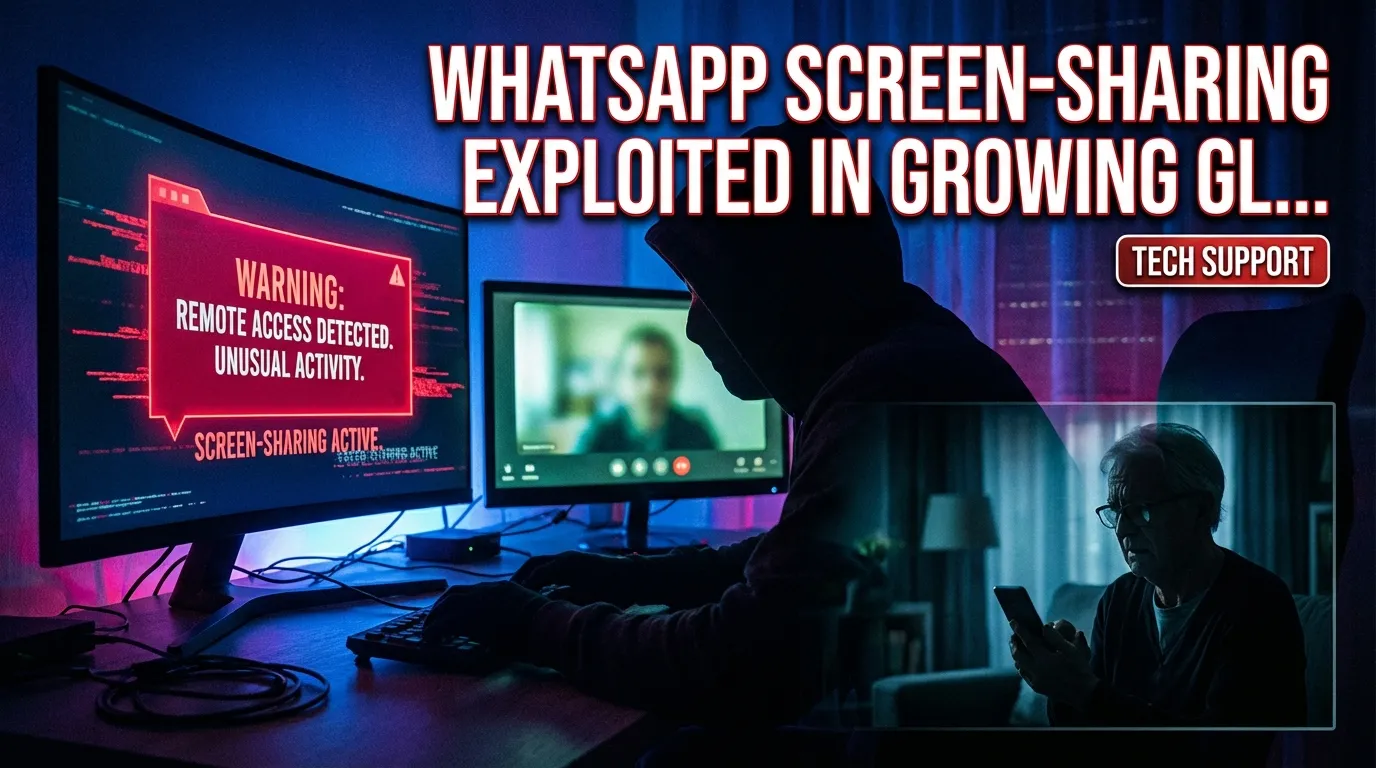
Police and regional security reporting show scammers increasingly abuse WhatsApp's screen‑sharing and remote‑assistance features to steal banking credentials or authorize transfers in real time. Dozens of incidents and millions in losses have been linked to the tactic since mid‑2025, with authorities urging users to decline unsolicited screen‑share requests and verify support contacts through official channels.
Investigations across multiple jurisdictions, including cited examples from Singapore, report a sharp rise in frauds that misuse WhatsApp’s screen‑sharing and remote‑assistance features to perpetrate real‑time thefts. Scammers typically initiate an unsolicited contact posing as bank or platform support, request remote screen access or guide victims to share sensitive on‑screen information, and then prompt live authorization of transfers or credential disclosure. Law‑enforcement summaries and regional policing sources attribute dozens of cases and millions of dollars in aggregated losses to this evolving tactic since mid‑2025, noting the speed and realism that screen‑sharing adds to social‑engineering attacks. Authorities stress practical defenses: never accept unsolicited remote access requests, independently verify any support contact via official phone numbers or websites, avoid entering credentials while sharing screens, and alert banks promptly if unauthorized transfers are requested or observed. The trend underscores how legitimate app features can be repurposed for fraud and reinforces cross‑border coordination among police and platform providers to detect abuse patterns and educate at‑risk users.
What this article means for a user right now
Police and regional security reporting show scammers increasingly abuse WhatsApp's screen‑sharing and remote‑assistance features to steal banking credentials or authorize transfers in real time. Dozens of incidents and millions in losses have been linked to the tactic since mid‑2025, with authorities urging users to decline unsolicited screen‑share requests and verify support contacts through official channels.
- Phone Scam Checker: For suspicious calls, voicemails, callback pressure, and unknown caller decisions.
- Scam Phone Number Lookup: For checking the context around unknown phone numbers and suspicious callbacks.
Related Scam Types
Best next step
For suspicious calls, voicemails, callback pressure, and unknown caller decisions.
Scam Phone Number LookupFor checking the context around unknown phone numbers and suspicious callbacks.
Spam Call BlockerFor suspicious callers, callback decisions, robocalls, and voice scam pressure.
Official resources
Industry anti-phishing organization with reporting and education resources.
FTC Consumer AdviceUS consumer guidance for scams, fraud patterns, and reporting options.
FBI Internet Crime Complaint CenterOfficial reporting channel for internet-enabled crime in the United States.
Related Articles
Tren de Aragua Links Cited in DOJ ATM Malware Case: Ploutus Used to Force U.S. ATMs to Dispense Cash
Tonawanda NY man charged after fake Microsoft “security” alert led to $22,000 fraud attempt