Zamar McPherson Guilty for BEC Scheme Diverting $3M+ via Fake Wire Instructions
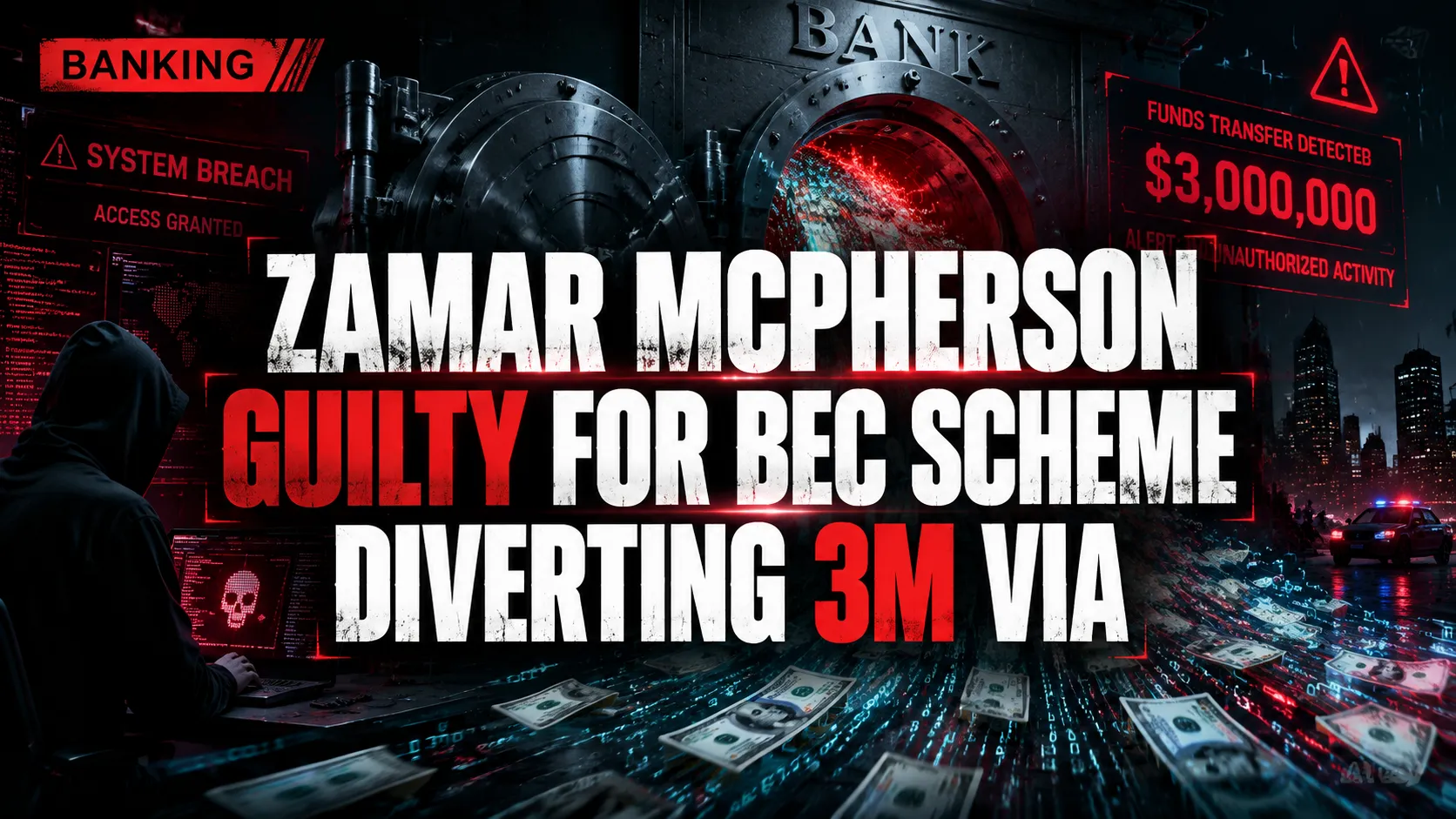
Zamar McPherson pleaded guilty to conspiracy and wire fraud tied to a business email compromise scheme. DOJ alleges compromised payee email accounts were used to change wire payment instructions and divert $3 million-plus.
A DOJ release says Zamar McPherson pleaded guilty to conspiracy to commit bank and wire fraud and to wire fraud connected to a business email compromise (BEC) scheme. Prosecutors allege conspirators compromised payee email accounts to alter payment instructions—redirecting incoming payments away from legitimate recipients and toward fraudulent bank accounts. As described by DOJ, the fraud depended on account takeover and manipulation of how businesses communicate and authorize payments. Instead of attacking payments at the final step, the perpetrators allegedly altered details early enough in the payment chain that victims and counterparties relied on the falsified instructions. The outcome, according to the government, was the diversion of more than $3 million to fraudulent bank accounts. BEC frauds often succeed because they exploit routine business behavior: invoices are reviewed quickly, payment details are treated as authoritative when they appear to come from a known email address, and internal controls can be bypassed when the communication appears consistent with prior contact. DOJ’s allegations highlight the risk of changing payment instructions by email without independent verification. While this case centers on a guilty plea, it reflects the broader pattern used in BEC operations—compromise, instruction changes, and rapid redirection of funds. The guilty outcome serves as a reminder that email-based payment changes should trigger verification steps, such as confirming changes via known phone numbers or established channels separate from email.
What this article means for a user right now
Zamar McPherson pleaded guilty to conspiracy and wire fraud tied to a business email compromise scheme. DOJ alleges compromised payee email accounts were used to change wire payment instructions and divert $3 million-plus.
- Phone Scam Checker: For suspicious calls, voicemails, callback pressure, and unknown caller decisions.
- Scam Phone Number Lookup: For checking the context around unknown phone numbers and suspicious callbacks.
Related Scam Types
Best next step
For suspicious calls, voicemails, callback pressure, and unknown caller decisions.
Scam Phone Number LookupFor checking the context around unknown phone numbers and suspicious callbacks.
Spam Call BlockerFor suspicious callers, callback decisions, robocalls, and voice scam pressure.
Official resources
Industry anti-phishing organization with reporting and education resources.
FTC Consumer AdviceUS consumer guidance for scams, fraud patterns, and reporting options.
FBI Internet Crime Complaint CenterOfficial reporting channel for internet-enabled crime in the United States.