
Zamar McPherson pleads guilty to business email scam involving bank and wire fraud conspiracy
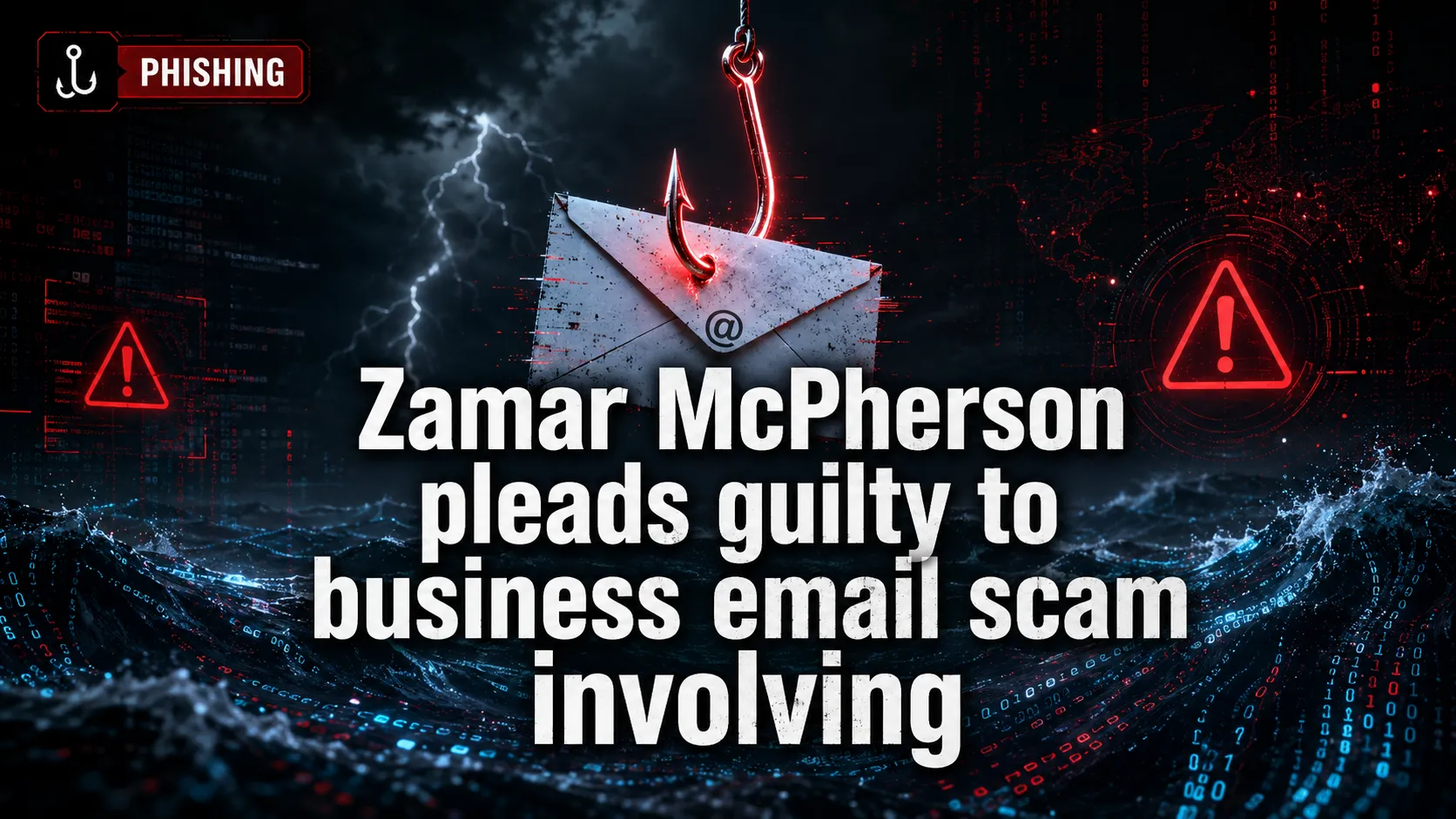
DOJ reports that Zamar McPherson of Boynton Beach, Florida pleaded guilty to conspiracy to commit bank and wire fraud and to wire fraud. The conduct was described as a business email scam (BEC).
A DOJ release from the Western District of Virginia states that Zamar McPherson, of Boynton Beach, Florida, pleaded guilty in federal court for his role in a business email scam. Prosecutors charged him with conspiracy to commit bank and wire fraud, as well as wire fraud. Business email compromise schemes typically rely on impersonation—fraudsters pose as executives, vendors, or trusted contacts to trick employees into sending money or sensitive information. The “wire fraud” component reflects that once victims are manipulated, funds may be requested or moved through electronic transfers, often in time-sensitive communications designed to prevent verification. DOJ’s framing of the case as a BEC highlights how these scams can target businesses rather than individual consumers, but the downstream impact can still be significant for organizations and partners. In such matters, prosecutors often focus on the fraudulent communications and the resulting transfers that create losses. The plea indicates the government’s position that McPherson played a role in coordinating the scheme’s execution, including actions tied to bank-related fraud and interstate electronic transfers. This case underscores the continuing federal crackdown on BEC fraud and the importance of verification controls for payment and wiring requests.
What this article means for a user right now
DOJ reports that Zamar McPherson of Boynton Beach, Florida pleaded guilty to conspiracy to commit bank and wire fraud and to wire fraud. The conduct was described as a business email scam (BEC).
- Phone Scam Checker: For suspicious calls, voicemails, callback pressure, and unknown caller decisions.
- Scam Phone Number Lookup: For checking the context around unknown phone numbers and suspicious callbacks.
Related Scam Types
Best next step
For suspicious calls, voicemails, callback pressure, and unknown caller decisions.
Scam Phone Number LookupFor checking the context around unknown phone numbers and suspicious callbacks.
Spam Call BlockerFor suspicious callers, callback decisions, robocalls, and voice scam pressure.
Official resources
Industry anti-phishing organization with reporting and education resources.
FTC Consumer AdviceUS consumer guidance for scams, fraud patterns, and reporting options.
FBI Internet Crime Complaint CenterOfficial reporting channel for internet-enabled crime in the United States.
Related Articles
FBI Warns Scammers Impersonating IC3 to Retarget Prior Victims With AI Deepfakes
DOJ: Scattered Spider member Peter Stokes arrested in Finland and extradited to the U.S. for intrusion and fraud