
DOJ: 3 Men Convicted in International $215M Email Hacking Scam Targeting 1,000+ Victims
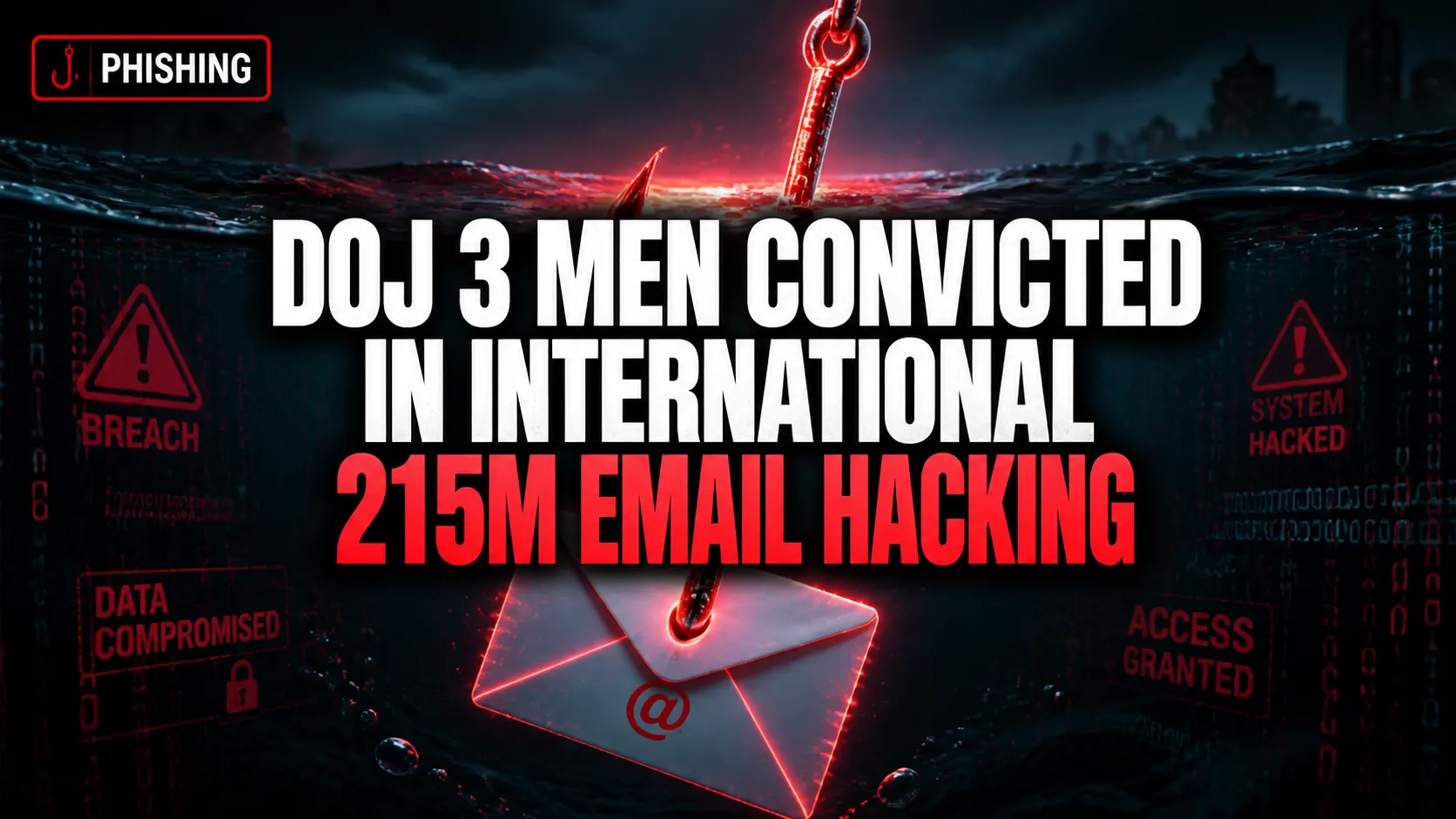
A federal jury convicted three men of wire-fraud conspiracy roles in an international email-hacking scheme. DOJ says the scheme defrauded more than 1,000 victims of about $215 million across 47 states and 19 countries.
The U.S. Department of Justice reported that a federal jury convicted three men for their roles in an international email-hacking scheme that prosecutors say victimized more than 1,000 people and generated roughly $215 million in proceeds. DOJ states that the conspiracy involved hacking victims’ emails and using those compromised accounts to carry out fraud targeting individuals and businesses. According to the DOJ release, the scheme had reach across the United States and abroad, affecting victims in 47 states and 19 countries. Prosecutors described how hacked email access was used to create fraudulent communications intended to generate proceeds from U.S. victims. By leveraging compromised inboxes, the alleged conspirators could impersonate legitimate contacts, coordinate payment demands, and increase credibility with targets. DOJ’s account emphasizes that the conduct was structured and scalable—an approach common in large business email compromise and wire-fraud operations. While the release does not change the core mechanism (email intrusion and monetization), it frames the case as a coordinated conspiracy rather than isolated incidents. The conviction highlights how email-based fraud can produce mass losses by combining stolen access with repeatable targeting across jurisdictions, requiring coordinated federal prosecution to hold conspirators accountable for wide-ranging harm.
What this article means for a user right now
A federal jury convicted three men of wire-fraud conspiracy roles in an international email-hacking scheme. DOJ says the scheme defrauded more than 1,000 victims of about $215 million across 47 states and 19 countries.
- Text Scam Checker: For suspicious SMS, fake delivery texts, smishing, and verification-code pressure.
- Phishing Link Checker: For suspicious links, login pages, fake delivery texts, and scam emails.
Best next step
Official resources
Industry anti-phishing organization with reporting and education resources.
FTC Consumer AdviceUS consumer guidance for scams, fraud patterns, and reporting options.
FBI Internet Crime Complaint CenterOfficial reporting channel for internet-enabled crime in the United States.
Related Articles
FBI Warns Scammers Impersonating IC3 to Retarget Prior Victims With AI Deepfakes
DOJ: Scattered Spider member Peter Stokes arrested in Finland and extradited to the U.S. for intrusion and fraud