DOJ Announces Ohio Federal–State Fraud Partnership Linked to $42M+ Alleged Schemes
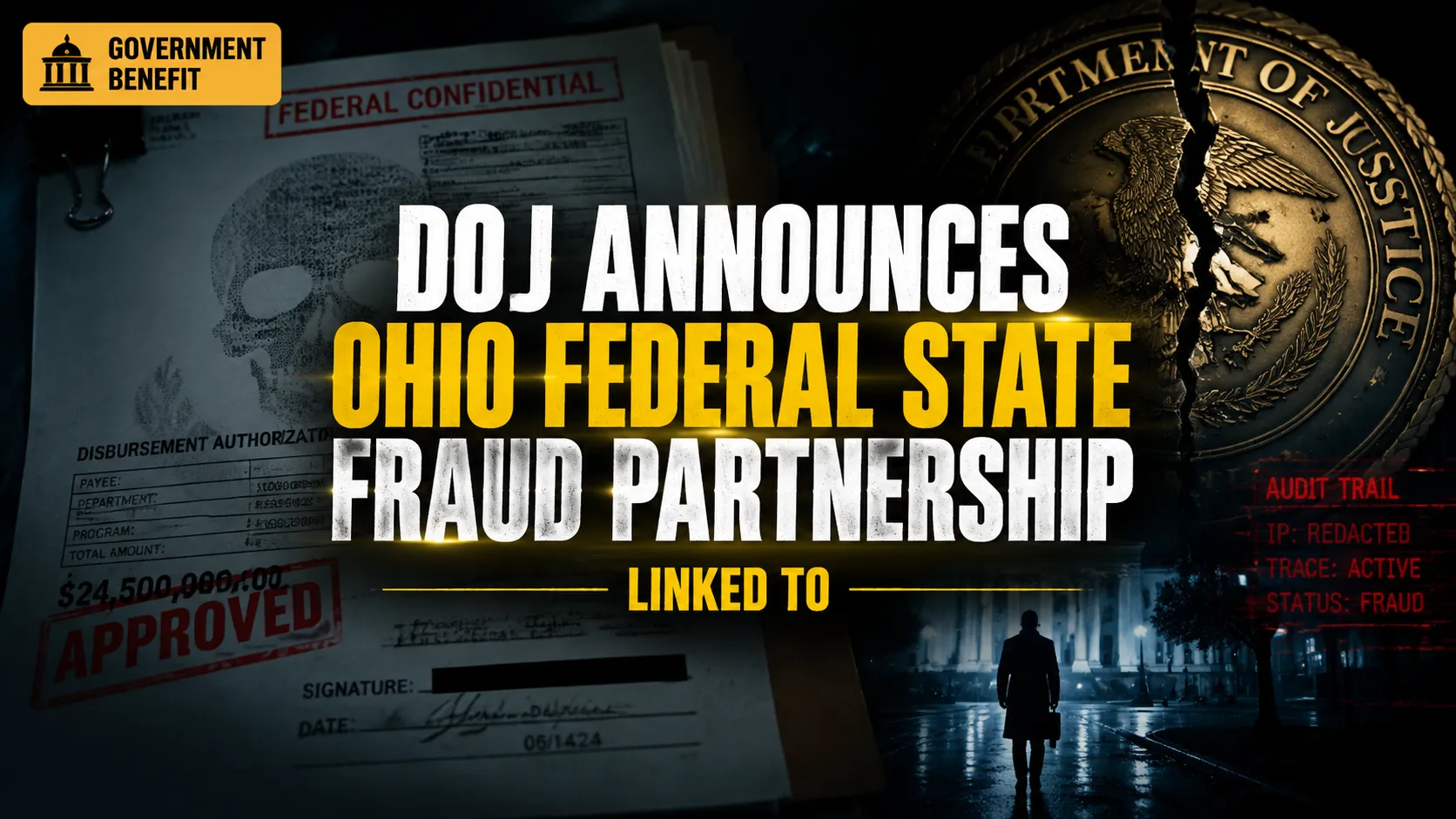
The DOJ described expanded federal-state cooperation in Ohio involving data-sharing and partnerships. Prosecutors tied the effort to charges against nine defendants over alleged fraud totaling more than $42 million.
The U.S. Department of Justice announced a federal-state partnership in Ohio aimed at prosecuting fraud more effectively. The release emphasizes data-sharing and collaborative efforts to improve detection, investigation, and case development—tools DOJ says can speed up fraud prosecution when large sums and complex schemes are involved. According to DOJ, the partnership is connected to charges against nine defendants accused of participating in alleged fraud involving more than $42 million. While the release points to fraud in multiple contexts—including consumer and government program fraud—it underscores the overarching theme: coordinated information flow can expose patterns and links across investigations that might otherwise take longer to assemble. DOJ also references additional detention orders and pending extradition in connection with another alleged fraud scheme estimated at approximately $15 million. Together, these elements portray an enforcement strategy focused not only on charging defendants, but also on securing custody and advancing cases despite international or multi-jurisdictional hurdles. For readers tracking fraud trends, the practical significance is that prosecutors are leaning into interoperability—sharing data across agencies to identify fraudulent activity earlier and more accurately. Fraud schemes commonly rely on fragmented records and administrative delays; partnership models attempt to close those gaps. The story functions as a fraud-warning in an enforcement sense: large-scale fraud is being pursued with structured cooperation, meaning alleged perpetrators face not just charges but expanded investigative pressure and coordination across state lines.
What this article means for a user right now
The DOJ described expanded federal-state cooperation in Ohio involving data-sharing and partnerships. Prosecutors tied the effort to charges against nine defendants over alleged fraud totaling more than $42 million.
- Text Scam Checker: For suspicious SMS, fake delivery texts, smishing, and verification-code pressure.
- Phishing Link Checker: For suspicious links, login pages, fake delivery texts, and scam emails.
Related Scam Types
Best next step
Official resources
Industry anti-phishing organization with reporting and education resources.
FTC Consumer AdviceUS consumer guidance for scams, fraud patterns, and reporting options.
FBI Internet Crime Complaint CenterOfficial reporting channel for internet-enabled crime in the United States.