DOJ: “Purgatory” member charged for swatting universities with hoax SWAT-triggering calls
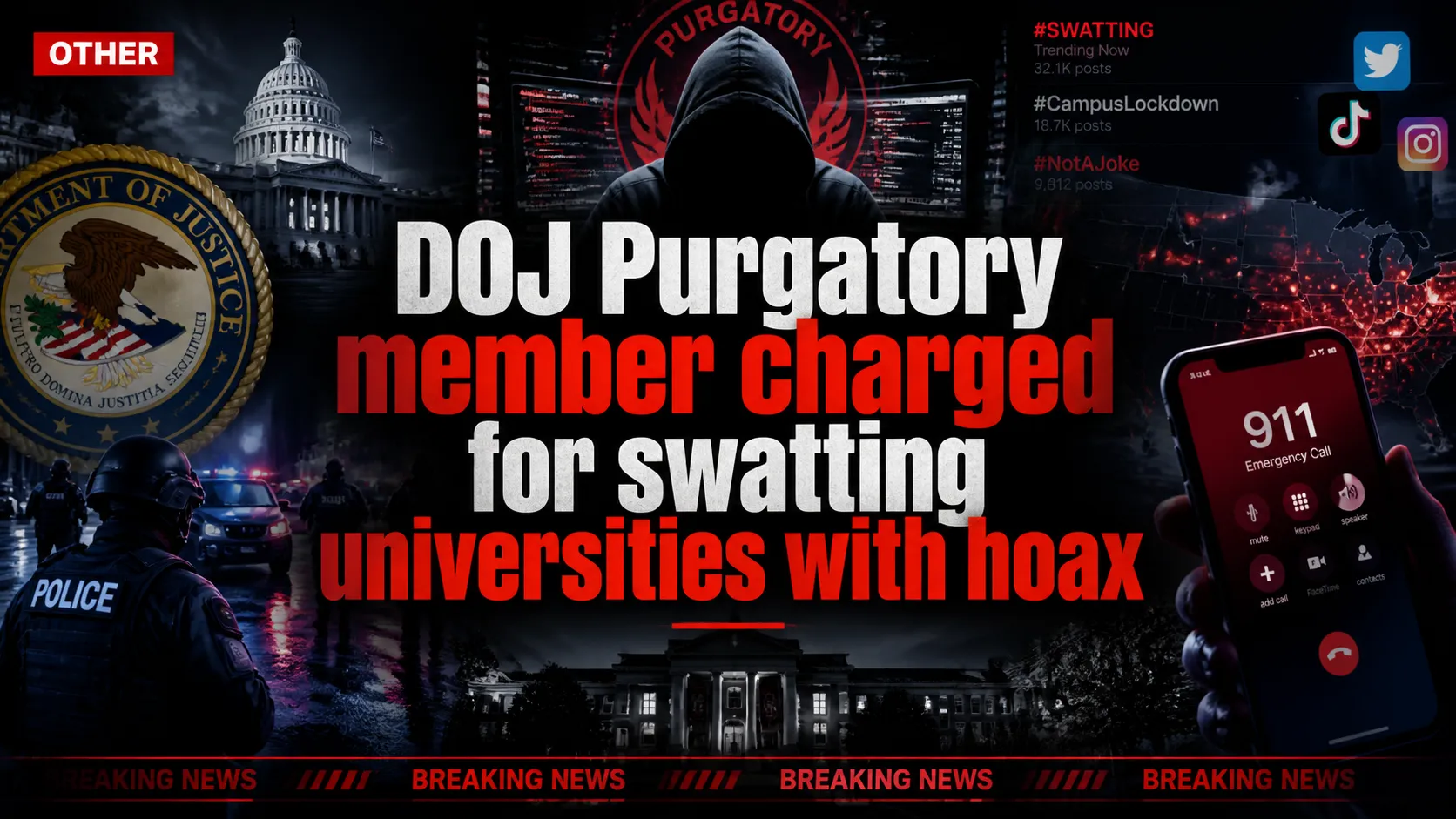
DOJ announced charges against a juvenile associated with the online cybercriminal group “Purgatory” for placing swatting calls targeting universities and other institutions. Prosecutors say the calls were hoaxes meant to prompt law enforcement, including SWAT, to respond to a target location.
U.S. authorities describe a troubling swatting case involving hoax calls intended to provoke armed police response. DOJ says charges were announced against a juvenile who is alleged to have participated in activity connected to the online cybercriminal group “Purgatory.” The complaint centers on swatting calls aimed at universities and other institutions, where callers allegedly made false reports designed to trigger emergency response systems. The press release explains that the goal was to draw law enforcement—specifically SWAT—to a target’s location. Swatting is both a cyber-enabled harassment tactic and a public-safety crime: it leverages telephone and emergency systems to create a high-risk situation that can lead to injuries, property damage, or traumatic experiences for victims and responders. In these scenarios, the “report” is typically fabricated and the call is intended to be taken seriously by dispatchers under time pressure. DOJ’s announcement underscores the seriousness of using hoax emergency calls to disrupt institutions like universities that must operate safely for students, staff, and visitors. For targets, the harm can include panic, lockdowns, and substantial law-enforcement resources diverted from real emergencies. The case also signals increased scrutiny of online groups whose members allegedly orchestrate coordinated harassment campaigns using swatting tactics.
What this article means for a user right now
DOJ announced charges against a juvenile associated with the online cybercriminal group “Purgatory” for placing swatting calls targeting universities and other institutions. Prosecutors say the calls were hoaxes meant to prompt law enforcement, including SWAT, to respond to a target location.
- Phone Scam Checker: For suspicious calls, voicemails, callback pressure, and unknown caller decisions.
- Scam Phone Number Lookup: For checking the context around unknown phone numbers and suspicious callbacks.
Best next step
For suspicious calls, voicemails, callback pressure, and unknown caller decisions.
Scam Phone Number LookupFor checking the context around unknown phone numbers and suspicious callbacks.
Spam Call BlockerFor suspicious callers, callback decisions, robocalls, and voice scam pressure.
Official resources
Related Articles

FinCEN flags $17.5 billion in suspicious activity tied to health-care fraud

FTC settlement restricts Humboldt Merchant Services after allegations of sham-merchant payment flows