DOJ: Two executives plead guilty in tech-support fraud scheme tied to telecom services
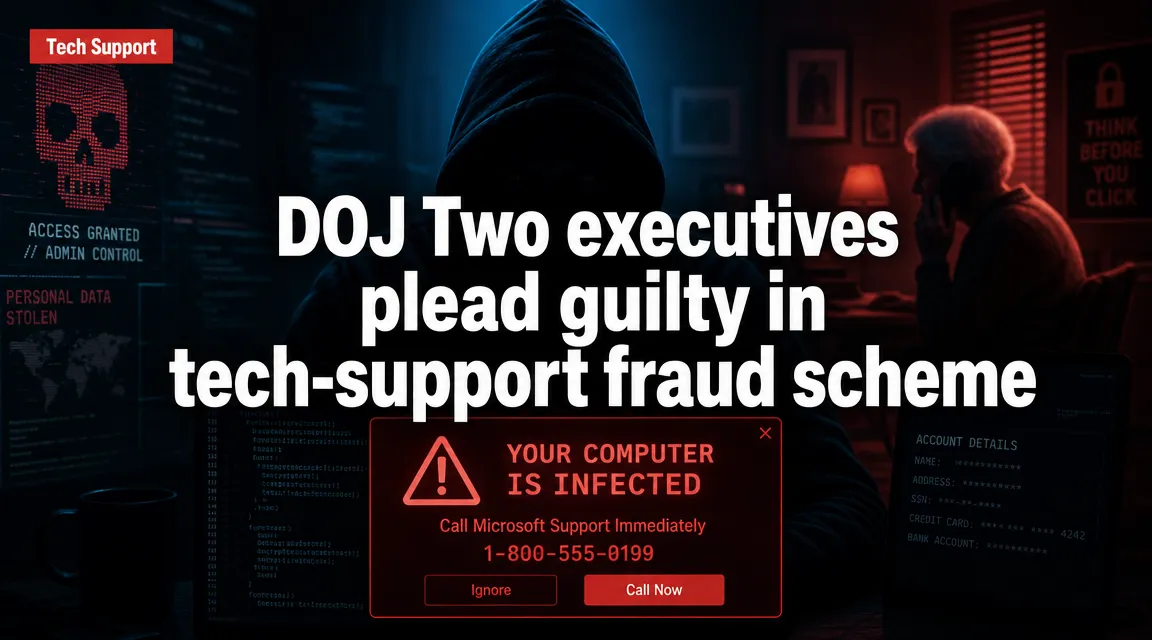
Two business executives pleaded guilty, according to DOJ, after prosecutors said they operated a telecom-services business connected to widespread tech-support fraud. The operation allegedly enabled phone and remote scams affecting victims across the U.S. and abroad.
The U.S. Department of Justice announced guilty pleas by two business executives in a tech-support fraud scheme tied to telecommunications services, describing an operation prosecutors say supported widespread phone-based and remote fraud. The case centers on alleged business conduct that, in prosecutors’ view, served as an “infrastructure” layer for tech-support and telemarketing scams. DOJ claims the defendants provided services linked to scam operations that reached victims across the United States and internationally. Tech-support fraud commonly follows a pattern: fraudsters impersonate support staff, claim there is an urgent computer or security issue, then push victims toward payment, remote access, or credential theft. By focusing on executives of an enabling business, the case illustrates how fraud networks can scale when they secure telecom capabilities that facilitate repeated calls, spoofing, and rapid victim targeting. The guilty pleas also signal that federal prosecutors will pursue not only the on-call scammers, but the behind-the-scenes providers that connect fraud actors with communication channels. For consumer safety, the practical takeaway is that unsolicited “support” outreach and pressure framed as urgent alerts should be treated as potential fraud, especially when accompanied by instructions to pay or grant access.
What this article means for a user right now
Two business executives pleaded guilty, according to DOJ, after prosecutors said they operated a telecom-services business connected to widespread tech-support fraud. The operation allegedly enabled phone and remote scams affecting victims across the U.S. and abroad.
- Phone Scam Checker: For suspicious calls, voicemails, callback pressure, and unknown caller decisions.
- Scam Phone Number Lookup: For checking the context around unknown phone numbers and suspicious callbacks.
Related Scam Types
Best next step
For suspicious calls, voicemails, callback pressure, and unknown caller decisions.
Scam Phone Number LookupFor checking the context around unknown phone numbers and suspicious callbacks.
Spam Call BlockerFor suspicious callers, callback decisions, robocalls, and voice scam pressure.
Official resources
Industry anti-phishing organization with reporting and education resources.
FTC Consumer AdviceUS consumer guidance for scams, fraud patterns, and reporting options.
FBI Internet Crime Complaint CenterOfficial reporting channel for internet-enabled crime in the United States.
Related Articles
Tren de Aragua Links Cited in DOJ ATM Malware Case: Ploutus Used to Force U.S. ATMs to Dispense Cash
Tonawanda NY man charged after fake Microsoft “security” alert led to $22,000 fraud attempt