FTC: Fake recruiters text “reply YES” to steal money with fake-check/task scams
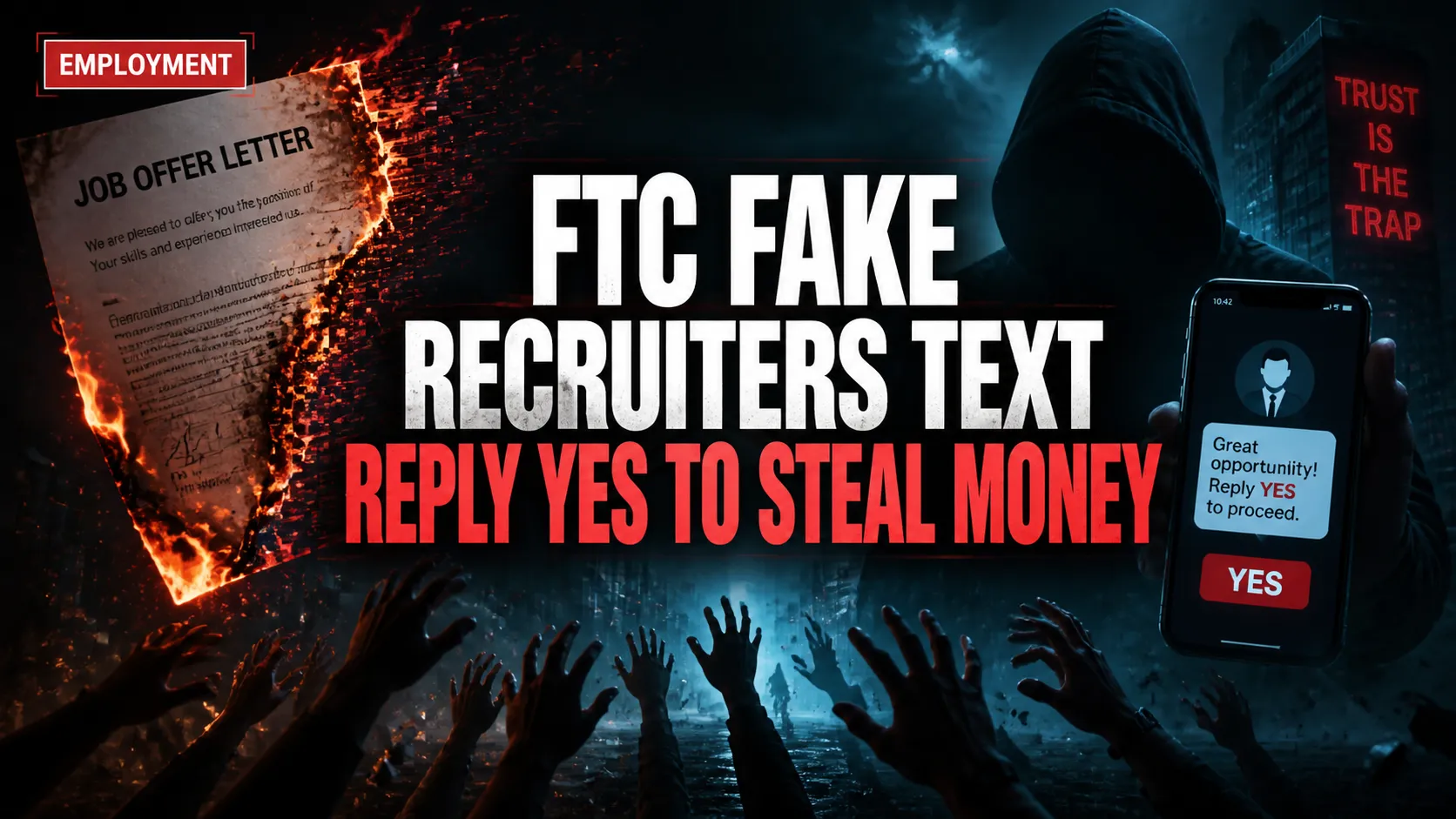
The FTC warns that scammers pose as recruiters for remote jobs and instruct targets to engage by replying “YES” or “INTERESTED” instead of using a link. After victims respond, scammers demand money, including through fake-check and “task” variants that push victims to deposit their own funds.
The FTC says it is seeing a text-message scam that mimics legitimate hiring. Scammers contact targets with a seemingly real-sounding offer for remote work, then use a specific engagement tactic: they ask the recipient to reply “YES” or “INTERESTED” rather than clicking a link. Once the victim responds, the scam shifts to payment and “next steps.” The FTC says scammers then pressure victims to send money in order to “process” onboarding or unlock work-related materials. The demanded payments can be wrapped in fake-check schemes, where victims receive a check and are instructed to send part of the money onward before the check bounces, or in “task” scams that require victims to deposit their own funds for tasks or training. The FTC emphasizes that genuine employers do not operate this way through unsolicited texts and money transfers, and that responding to the bait message can quickly escalate to financial loss. If you receive an unexpected job offer by text, treat it as high risk: verify independently, don’t follow payment instructions, and report suspicious messages.
What this article means for a user right now
The FTC warns that scammers pose as recruiters for remote jobs and instruct targets to engage by replying “YES” or “INTERESTED” instead of using a link. After victims respond, scammers demand money, including through fake-check and “task” variants that push victims to deposit their own funds.
- Text Scam Checker: For suspicious SMS, fake delivery texts, smishing, and verification-code pressure.
- Phishing Link Checker: For suspicious links, login pages, fake delivery texts, and scam emails.
Best next step
Official resources
Industry anti-phishing organization with reporting and education resources.
FTC Consumer AdviceUS consumer guidance for scams, fraud patterns, and reporting options.
FBI Internet Crime Complaint CenterOfficial reporting channel for internet-enabled crime in the United States.
Related Articles
Mario Flores Sentenced to 96 Months in $89M Off-the-Books Payroll Tax Fraud (Honduras)
Bridal shop owner sentenced to prison for willfully failing to pay $1.3M+ in employment taxes (DOJ)