FTC: Ignore jury-duty arrest threats via calls claiming missing service
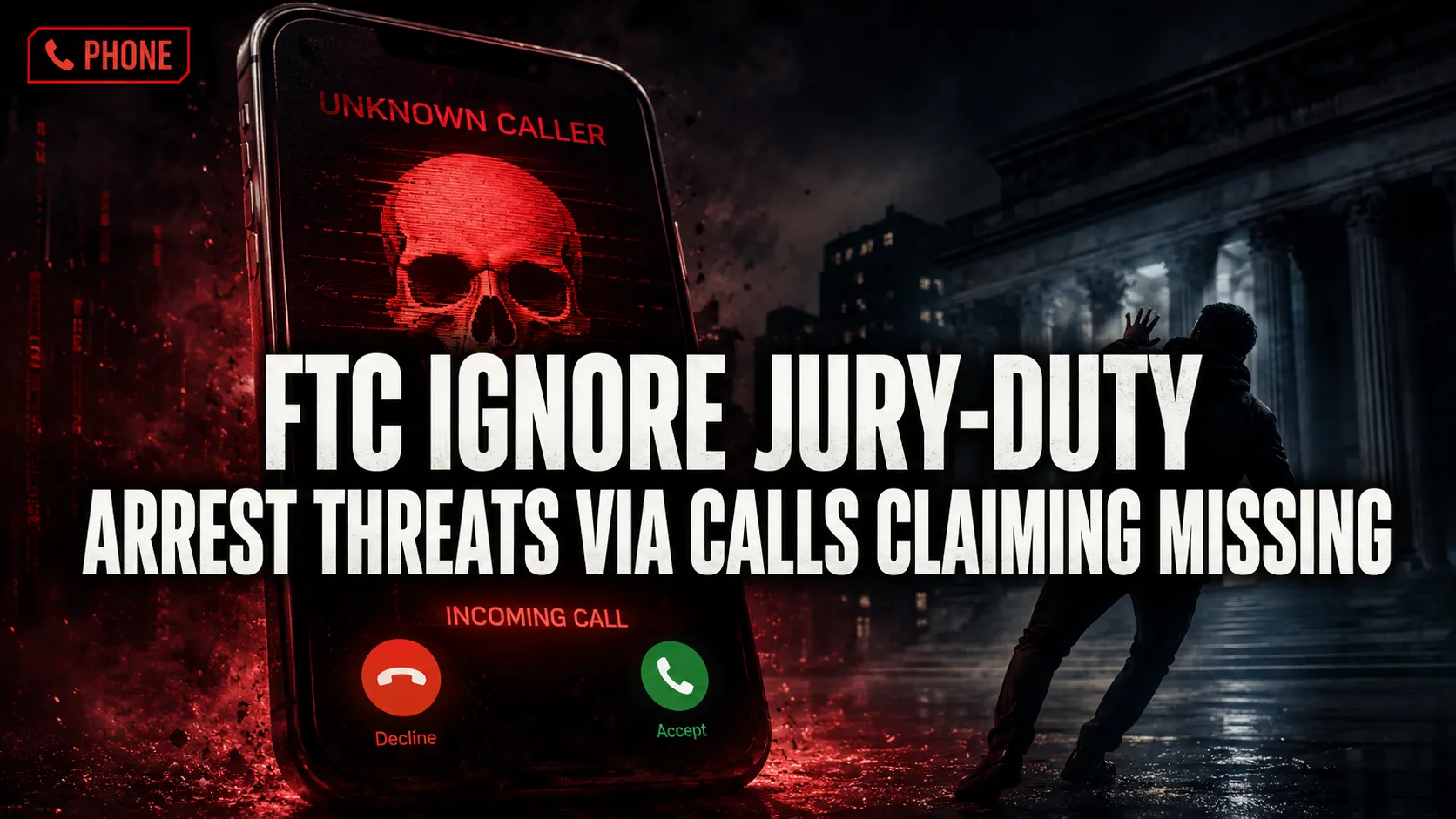
Scammers impersonate government officials and claim you missed jury duty. They threaten arrest over the phone and push victims to pay to avoid consequences.
The FTC warns consumers about a government-impersonation scam where fraudsters contact people by phone, claiming they missed jury duty. The callers use “arrest warrant” threats to pressure victims into acting quickly, often demanding immediate payment to prevent law-enforcement action. In many cases, the scammers may also send follow-up messages designed to look official, such as fake documents sent through text or email. The FTC emphasizes that real law enforcement will not threaten arrest over mass phone calls or send “warrants” by text/email. It also notes that legitimate agencies do not require payment by phone to resolve purported criminal or legal problems. Victims are commonly instructed to pay using hard-to-reverse methods such as wire transfers, crypto, or gift cards. The FTC’s guidance focuses on recognizing the pressure tactics and avoiding any payment or information sharing. If you receive a call like this, the safer approach is to hang up, verify the information through official channels, and report the scam.
What this article means for a user right now
Scammers impersonate government officials and claim you missed jury duty. They threaten arrest over the phone and push victims to pay to avoid consequences.
- Phone Scam Checker: For suspicious calls, voicemails, callback pressure, and unknown caller decisions.
- Scam Phone Number Lookup: For checking the context around unknown phone numbers and suspicious callbacks.
Related Scam Types
Best next step
For suspicious calls, voicemails, callback pressure, and unknown caller decisions.
Scam Phone Number LookupFor checking the context around unknown phone numbers and suspicious callbacks.
Spam Call BlockerFor suspicious callers, callback decisions, robocalls, and voice scam pressure.