FTC: “Party invite” emails/phishing pages trick users into entering email and password
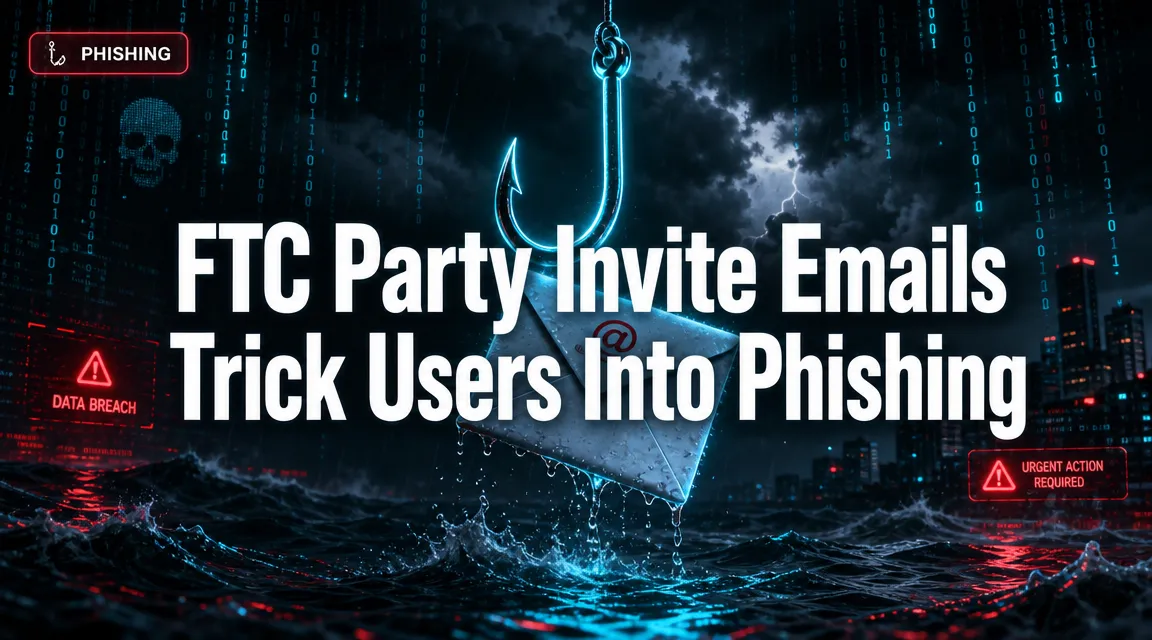
The FTC warns that “party invite” themed messages can lead victims to phishing pages that harvest email credentials. If attackers get the login information, accounts may be taken over and used for further fraud.
The FTC Consumer Alert warns consumers about a phishing pattern in which messages framed as “party invites” attempt to lure people into entering their email address and password. These scams typically arrive as unsolicited emails that appear timely and social, encouraging quick action to view or accept the invitation. The alert explains that the real objective is credential theft: victims who type their information into the scam page effectively hand over login access to the attacker. Once credentials are captured, the impact can extend beyond a single compromised account. Email takeovers can be leveraged to reset passwords for other services, send messages to contacts, or use the account to support additional scams that look legitimate to recipients. The FTC advises consumers to change passwords promptly if they suspect credentials were entered and to take identity-theft steps if misuse occurs. The consumer guidance also reinforces general phishing resistance: verify unexpected messages, be cautious with links that require credentials, and treat “urgent” or “curious” invitations as red flags. The alert positions party-invite scams as a common social-engineering tactic—especially during seasonal social periods—where attackers rely on curiosity and trust.
What this article means for a user right now
The FTC warns that “party invite” themed messages can lead victims to phishing pages that harvest email credentials. If attackers get the login information, accounts may be taken over and used for further fraud.
- Phone Scam Checker: For suspicious calls, voicemails, callback pressure, and unknown caller decisions.
- Scam Phone Number Lookup: For checking the context around unknown phone numbers and suspicious callbacks.
Related Scam Types
Best next step
For suspicious calls, voicemails, callback pressure, and unknown caller decisions.
Scam Phone Number LookupFor checking the context around unknown phone numbers and suspicious callbacks.
Spam Call BlockerFor suspicious callers, callback decisions, robocalls, and voice scam pressure.