Tren de Aragua Links Cited in DOJ ATM Malware Case: Ploutus Used to Force U.S. ATMs to Dispense Cash
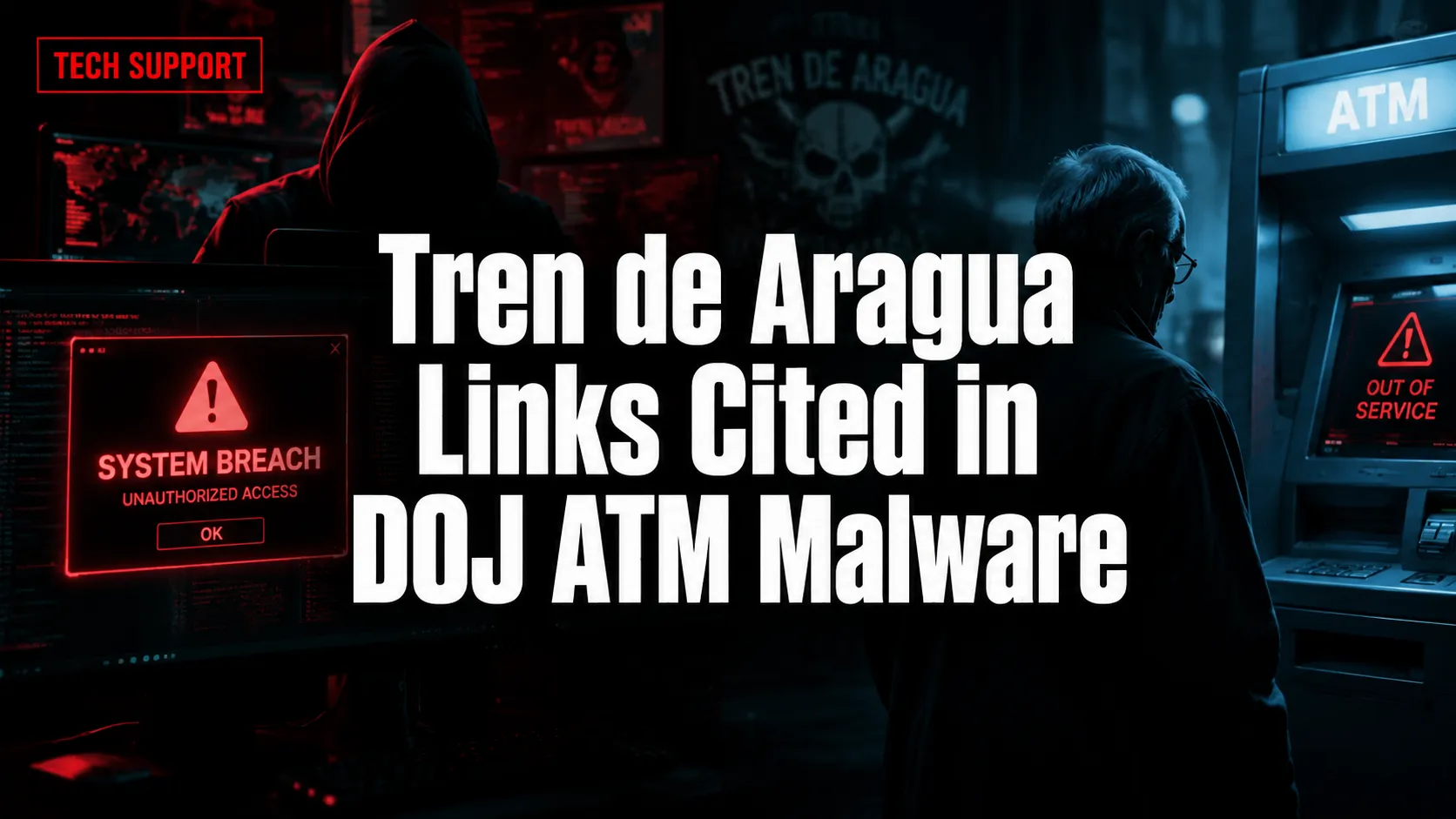
DOJ alleges Ploutus malware was deployed to compromise ATMs and trigger cash payouts, with the scheme tied to Tren de Aragua. Prosecutors cite restitution to victim banks as part of the sentencing outcome.
The DOJ press release describing the ATM “jackpotting” sentencing also focuses on alleged criminal infrastructure and affiliations. Prosecutors say the conspiracy involved deploying Ploutus malware, which enabled attackers to compromise ATMs and force them to dispense cash. The government frames the incident as cyber-enabled theft targeting financial institutions rather than a localized, hardware-only crime. In explaining the investigation, DOJ also ties the matter to Tren de Aragua, a group prosecutors identify to provide context about the alleged network behind cyber-facilitated crimes. That linkage can matter for sentencing and for how investigators trace participants, tools, and operational methods across cases. The government’s inclusion of restitution to victim banks underscores that ATM malware incidents can impose direct and indirect costs: lost funds, incident response expenses, system remediation, and fraud monitoring enhancements. Even when consumers are reimbursed, the ripple effects can affect service availability and bank security postures. Overall, the case illustrates how cyber intrusions can be weaponized quickly against widely distributed assets like ATMs. It also demonstrates that “jackpotting” prosecutions often combine technical allegations (malware deployment) with organized crime context and financial harm estimates.
What this article means for a user right now
DOJ alleges Ploutus malware was deployed to compromise ATMs and trigger cash payouts, with the scheme tied to Tren de Aragua. Prosecutors cite restitution to victim banks as part of the sentencing outcome.
- Text Scam Checker: For suspicious SMS, fake delivery texts, smishing, and verification-code pressure.
- Phishing Link Checker: For suspicious links, login pages, fake delivery texts, and scam emails.
Related Scam Types
Best next step
Official resources
Industry anti-phishing organization with reporting and education resources.
FTC Consumer AdviceUS consumer guidance for scams, fraud patterns, and reporting options.
FBI Internet Crime Complaint CenterOfficial reporting channel for internet-enabled crime in the United States.
Related Articles
Tonawanda NY man charged after fake Microsoft “security” alert led to $22,000 fraud attempt
Western District of New York: Didi Zou Charged After 'Microsoft Security' Phone Scam Leads to $22K Wire Fraud