DOJ Elder Abuse Awareness Video Warns: Government Impersonation Demands Gift Cards or Crypto
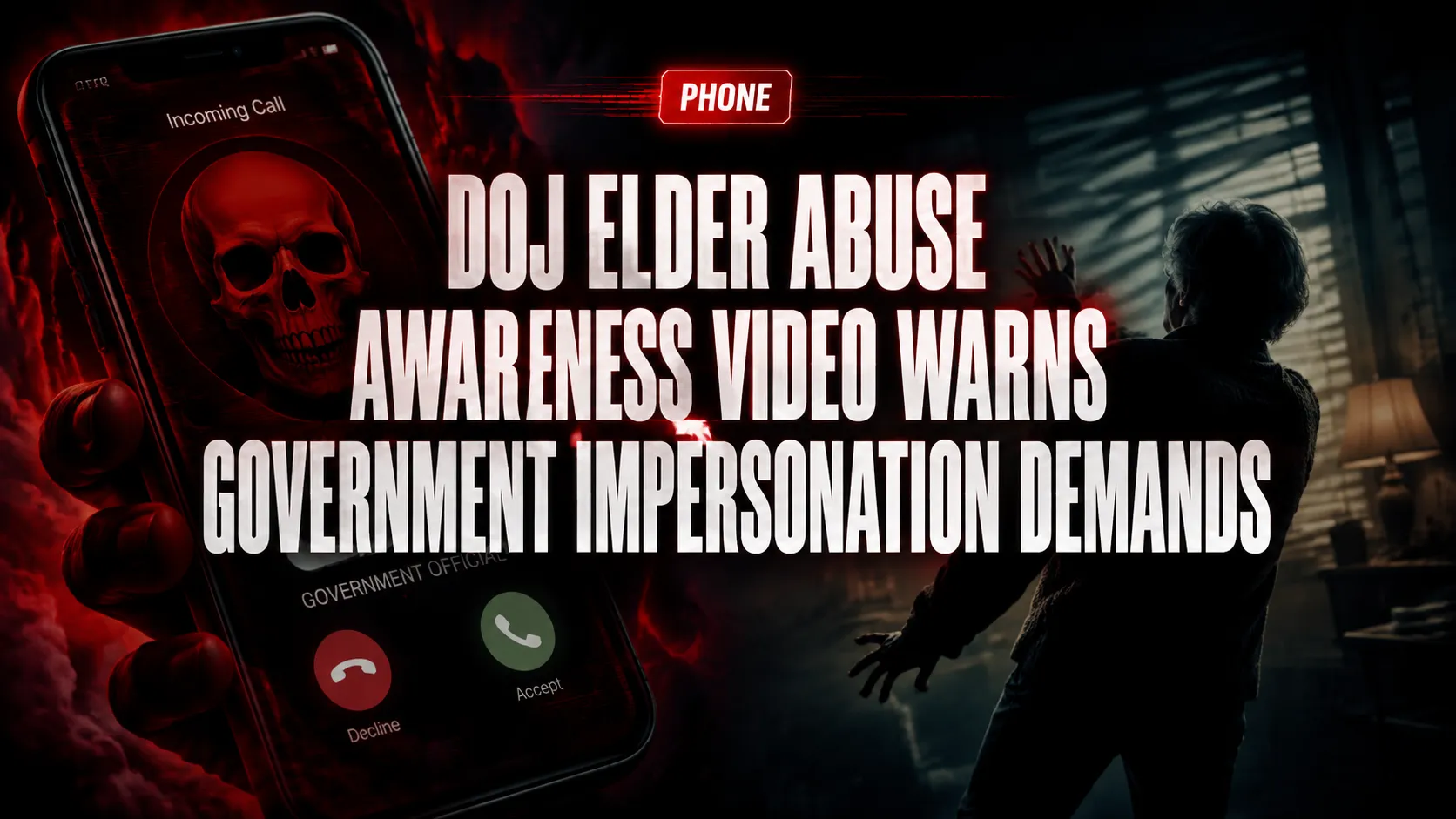
A DOJ video for World Elder Abuse Awareness Day warns that scammers impersonate government officials to pressure victims into paying. It says the Department will not call unexpectedly to demand money or request gift cards/cryptocurrency.
As part of World Elder Abuse Awareness Day messaging, the DOJ released a video warning about a common scam pattern that targets older adults: government impersonation paired with urgent payment demands. The DOJ message warns that scammers may contact victims unexpectedly and claim to be acting on behalf of authorities, using intimidation and time pressure to compel immediate action. The video emphasizes that the Department will not call out of the blue to demand money and will not request gift cards or cryptocurrency. These payment methods are frequently used in fraud cases because they are difficult to reverse once money is sent, and because scammers can demand transfers quickly before victims verify information. The DOJ framing highlights how impersonation works operationally: callers often present a fake problem, threaten consequences, and then direct victims toward a payment channel. Victims can be instructed to buy gift cards, send crypto, or move funds through other irreversible mechanisms. For older adults and caregivers, the takeaway is that unsolicited government-style calls requiring gift cards or crypto are a red flag. The DOJ warning supports consumer protection efforts by providing clear examples of what scammers do and by identifying payment requests that should be treated as scams. The video ties the warning to elder-focused abuse prevention and underscores that victims should verify any governmental outreach using trusted contact methods.
What this article means for a user right now
A DOJ video for World Elder Abuse Awareness Day warns that scammers impersonate government officials to pressure victims into paying. It says the Department will not call unexpectedly to demand money or request gift cards/cryptocurrency.
- Phone Scam Checker: For suspicious calls, voicemails, callback pressure, and unknown caller decisions.
- Scam Phone Number Lookup: For checking the context around unknown phone numbers and suspicious callbacks.
Related Scam Types
Best next step
For suspicious calls, voicemails, callback pressure, and unknown caller decisions.
Scam Phone Number LookupFor checking the context around unknown phone numbers and suspicious callbacks.
Spam Call BlockerFor suspicious callers, callback decisions, robocalls, and voice scam pressure.