Warren County, NY: Probe Continues Into $3.3M Phishing Scam Involving Vendor Impersonation and Mules
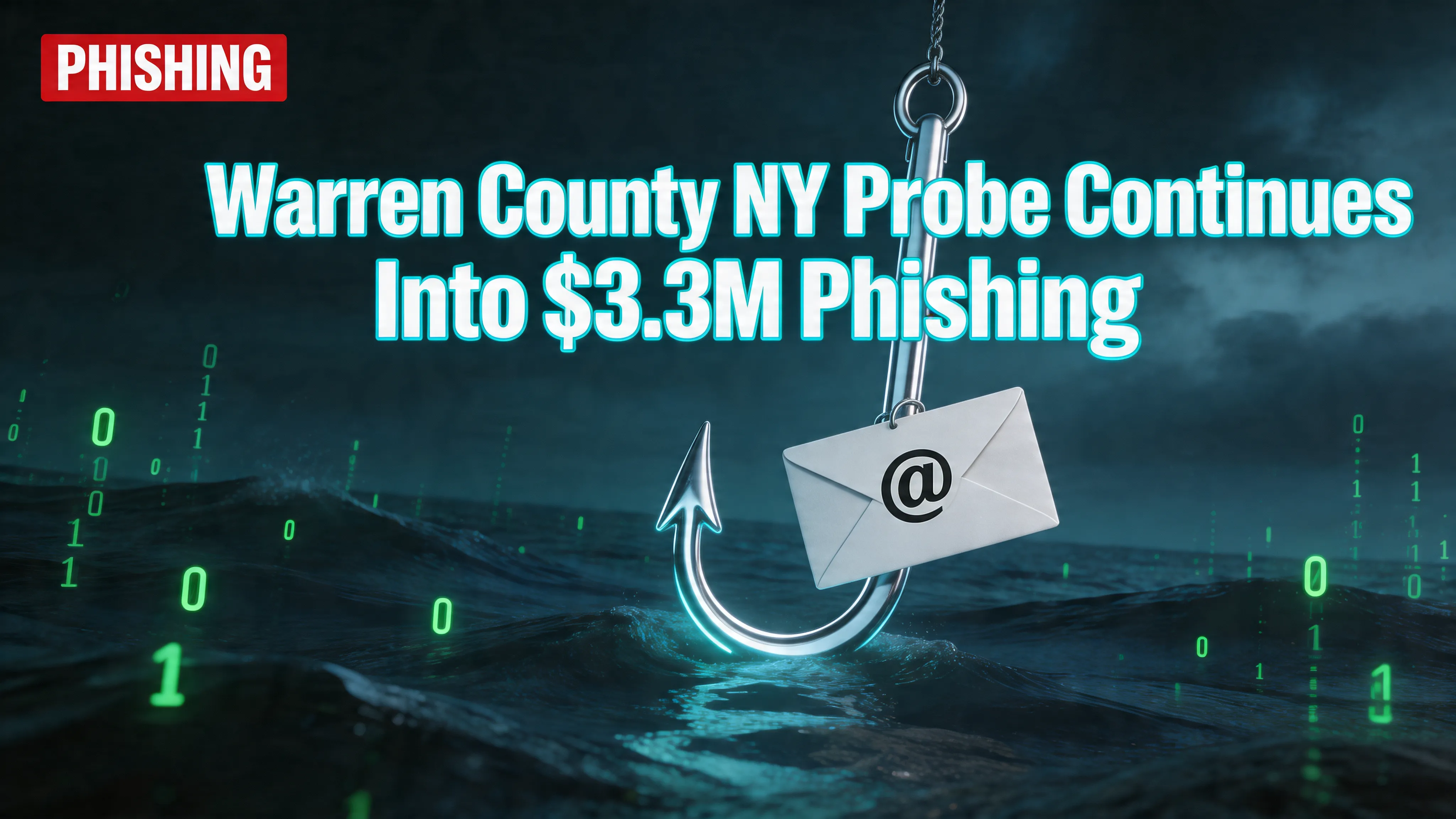
GovTech reports that Warren County’s investigation into a phishing scam with an initial $3.3 million loss is still ongoing. The reporting describes how multiple banks and “mules” were identified in the stolen-funds flow, including involvement tied to vendor impersonation.
GovTech reports that Warren County, New York continues investigating a major phishing scam that began with an initial reported loss of $3.3 million. The coverage indicates that investigators have been tracing the movement of stolen funds across the financial system, identifying multiple banks and using “mules” within the laundering pipeline. Such cases often depend on rapid redirection of payments, accounts that appear legitimate on the surface, and layered transfers that make recovery slower and more complex. The report also describes how vendor impersonation played a role in the scheme. In these scenarios, attackers typically pose as trusted entities (such as vendors or business partners) to obtain authorization or payment instructions. Once the payment is redirected, the fraud can expand across accounts and intermediaries, requiring coordinated work between law enforcement and financial institutions. Importantly for prevention, the story highlights that outcomes are shaped by the completeness of the paper trail—bank records, transfer logs, and identities associated with mule accounts. Recovery can depend on how quickly the incident is detected, whether payment reversals are possible, and how effectively investigators can connect each stage of the transaction chain. The ongoing probe serves as a practical reminder for organizations to strengthen verification steps for payment changes, especially when vendor identities and instructions are altered.
What this article means for a user right now
GovTech reports that Warren County’s investigation into a phishing scam with an initial $3.3 million loss is still ongoing. The reporting describes how multiple banks and “mules” were identified in the stolen-funds flow, including involvement tied to vendor impersonation.
- Phone Scam Checker: For suspicious calls, voicemails, callback pressure, and unknown caller decisions.
- Scam Phone Number Lookup: For checking the context around unknown phone numbers and suspicious callbacks.
Related Scam Types
Best next step
For suspicious calls, voicemails, callback pressure, and unknown caller decisions.
Scam Phone Number LookupFor checking the context around unknown phone numbers and suspicious callbacks.
Spam Call BlockerFor suspicious callers, callback decisions, robocalls, and voice scam pressure.
Official resources
Industry anti-phishing organization with reporting and education resources.
FTC Consumer AdviceUS consumer guidance for scams, fraud patterns, and reporting options.
FBI Internet Crime Complaint CenterOfficial reporting channel for internet-enabled crime in the United States.